Category: Home Care

  • In Home Care, Part of the Parkinson’s Care Plan

    In Home Care, Part of the Parkinson’s Care Plan

    If your older loved one has Parkinson’s Disease, their need for practical and emotional support will increase over the years. You may be devoting much of your time to caring for them now, or both of you may be wondering about how realistic it is to try to keep them at home. But with the right preparation and planning, home care can be a strong alternative to a group or institutional setting; many people with Parkinson’s remain healthier and safer at home.

    Parkinson’s disease is a progressive neurological disease caused by the destruction of brain cells that produce dopamine, a chemical the brain uses to direct physical movement. Without these cells, the body can’t produce dopamine; without dopamine, the brain can’t tell the body how to move. This eventually leads to tremors, stiffness, slow movement, and impaired balance. It can also cause skin problems, sleep disruption, difficulty chewing or swallowing, and depression.

    The symptoms vary widely from person to person, and there is no specific test to diagnose Parkinson’s disease directly. A diagnosis of Parkinson’s is based on the symptoms above, the person’s medical history, and a neurological and physical examination. Many of the lab tests and imaging scans that doctors perform when looking for Parkinson’s actually eliminate other possible causes of the symptoms, narrowing the diagnosis down to Parkinson’s.

    A doctor may even prescribe one of the medications used to treat Parkinson’s, carbidopa-levodopa, as one step toward determining if the person has the disease. If the person’s symptoms are consistent with Parkinson’s and tests eliminate other diseases, and if the person improves while taking carbidopa-levodopa, then a doctor will confirm a diagnosis of Parkinson’s.

    There is no cure for Parkinson’s, but medications and other therapies can ease symptoms radically and restore the quality of life to a very great degree for many years. Levodopa converts to dopamine if it is introduced directly into the system; carbidopa prevents it from converting too soon. Other medications do not convert, but mimic the effects of dopamine or slow the breakdown of dopamine. Still, others address symptoms like tremors directly. The Mayo Clinic explains the causes, symptoms, and treatments of Parkinson’s Disease very simply and clearly on their website.

    The longer a person has the disease, the more pronounced the symptoms become and the harder they are to control. Therefore, the older a person is, the more difficulty their Parkinson’s may cause. When the disease is advanced, the support the person needs can put a lot of pressure on the family and badly tax family caregivers. This is where home care services come in.

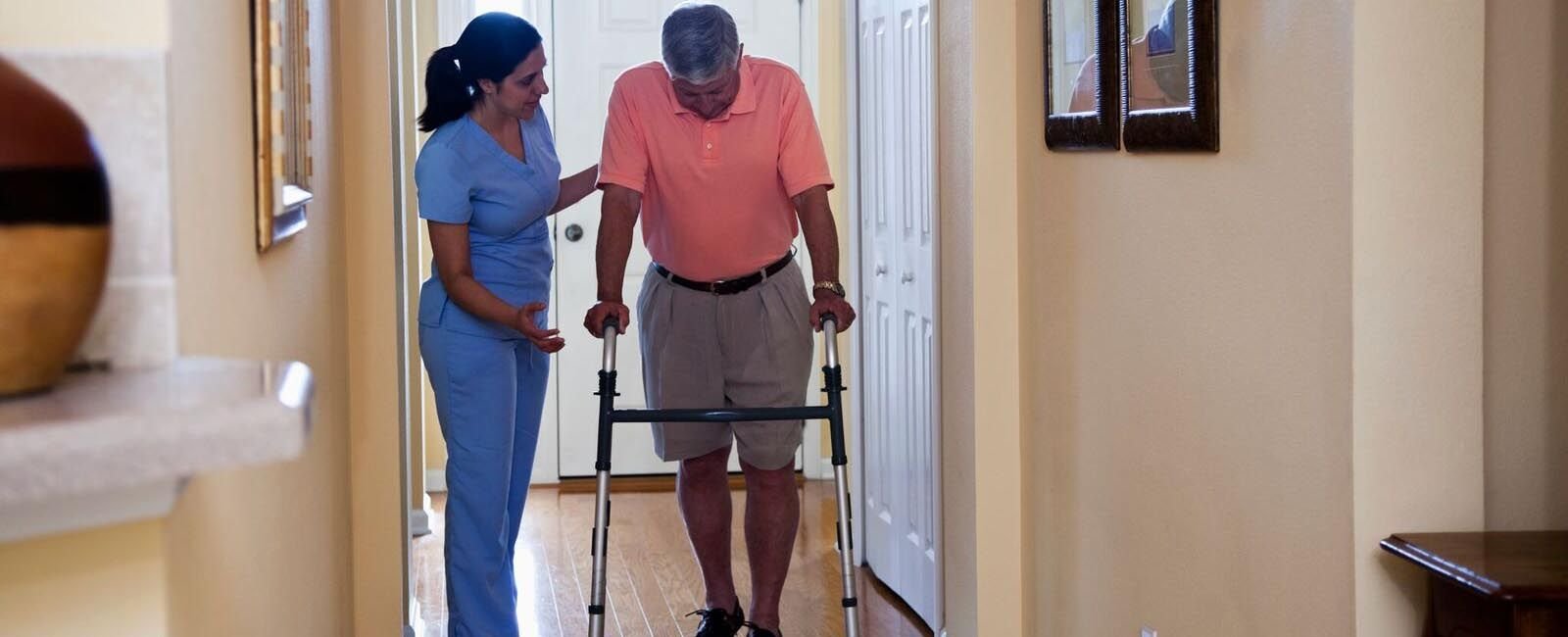
    Home care services cover such a range of tasks that they are easily adjusted to the level of need of the care recipient. At first, a caregiver can simply run errands, shop for groceries, tidy up the house, and drive the person who has Parkinson’s to doctor appointments and physical and occupational therapy. They can keep an eye on home safety and help the person get around the house. Once a Parkinson’s plan is initiated, a caregiver can help with walking, stretching, and other prescribed exercises and remind the person when to take medications, as well as plan and prepare healthy meals that strengthen muscles and bones.

    When mobility becomes more limited, a home caregiver can help with routine daily activities like bathing, dressing, eating, and using the bathroom. A skilled caregiver is sensitive to the way that Parkinson’s and other diseases can slow a person’s pace and can help with essentials while respecting privacy and the need for a normal routine. At any level of severity in symptoms, a professional home caregiver can relieve overtaxed family caregivers who need a break or free time to pursue their own self-care.

    In-home care is often a better alternative than assisted living or a skilled nursing facility. First of all, it is home, a familiar and emotionally secure environment. Your loved one’s home may need some minor alterations to make it physically safe for them, such as non-slip pads or double-sided rug tape under the rugs, generous lighting in all entryways, passages, and rooms, secure handrails and second rails on stairways, and grab bars near the toilet and in the shower or tub. But these are routine precautions for many older adults who stay at home and usually are not difficult to adjust. In exchange, your older loved one will be surrounded by the people and things that mean most.

    While assisted living and skilled nursing facilities have multiple medical personnel available around the clock, a home care provider may actually be more focused on your older loved one. With only one, or perhaps two, people to care for, a professional home caregiver is less likely to mix up medications, give the wrong dose, miss a dose, or be called away to an emergency before completing a task. A caregiver with one person to focus on is more likely to notice changes in the way medications are affecting an older adult or how long they are lasting. Best of all, a professional home caregiver is easily located and more available to talk with family members about changes in symptoms and emotions that the family notices. The family doesn’t have to leave multiple messages or look around the facility to locate the care provider.

    Finally, a professional caregiver, however much they like and respect the older person in their care, can be more objective exactly because they are professional and because they have not known the person all their lives. A good home caregiver can be a good sounding board for the family’s concerns and anxieties and provide a steadying influence while the family and the older adult adjust to changes and new limitations.

    CarePlus provides comprehensive in-home services for assisted daily living and offers a specialized program for older adults with Parkinson’s disease. Our caregivers can help with lifestyle strategies, nutrition and daily living, physical stability, mobility and exercise, and fall prevention, as well as building confidence and perspective and connecting the older adult with others in their situation and with community programs.

    Helping older adults remain at home is our passion. For the past 25 years, we have taken pride in helping our clients in Montgomery County and the surrounding area age in place with excellent services provided by highly trained, trustworthy and compassionate caregivers. Call us today at 301-740-8870 or email us at info@careplusinc.com to discuss your needs.

  • CarePlus: Simply the Best of Home Care Agencies

    CarePlus: Simply the Best of Home Care Agencies

    Earlier this year, CarePlus won the Best of Home Care Provider of Choice award. We were one of only 18 sites in Maryland to make the list. The award was made by a professional evaluation firm that we engaged to collect monthly feedback from our clients and give us suggestions for improvement.

    One important reason that people hire home care agencies rather than hiring individual providers on their own is that agencies screen, interview, and test caregivers, check their references, and run a background check. The family of an older person does not have to do this work to feel that their loved one is in safe hands, and in most cases the agencies have already had positive experiences with the caregiver. (See the CarePlus qualifications and guidelines for prospective employees.)

    In the same way, people deserve to know that the home care agencies they are considering have been vetted, tested, and reviewed. To meet this need, agencies like CarePlus engage outside evaluators to tell them how they can improve and to tell the public how they compare with other agencies. These evaluators speak with older people in the agency’s care or their families, report to the agency with feedback and suggestions for improvement, and share their ratings with the public, especially those looking for home care services of their own.

    To ensure that we’re giving the best service possible, CarePlus has engaged Home Care Pulse, the home care field’s leading firm in satisfaction research, to poll our clients and let us—and prospective clients—know how we’re doing. Every month, Home Care Pulse speaks with a percentage of clients we serve and asks them about the quality of service provided by our caregivers, communications with our office staff, the impact of our services on their daily lives, and other issues. Every month, they provide us with a report and post the results on their website, Best of Home Care.com. This year, they designated CarePlus a Provider of Choice.

    To win this rating, CarePlus had to qualify as a Home Care Pulse Certified Trusted Provider™ for at least six months and receive higher ratings than others in the field during that time. We agree on the percentage of our clients or their families to be contacted by Home Care Pulse, but we cannot specify which clients will be interviewed. Conversely, clients and their families cannot provide a spontaneous review, whether positive or critical; respondents are selected randomly by Home Care Pulse.

    Those we serve say that our caregivers are thoughtful, compassionate, flexible, and good at following instructions. They appreciate our office staff for their consistent communication, their efficiency, their help with solving new problems, and their connections to outside resources.

    CarePlus is also ranked on Family Assets as 2 out of 9 total home care home care agencies in the city of Gaithersburg, 18 out of 158 home care providers within a 20-mile radius, and 16 out of 177 home care providers within the state of Maryland.

    Starting August 14 through September 13, the Readers’ Poll for Best of Bethesda will be open. There are quite a few categories that support our aging community in Bethesda and the surrounding areas. You will have the opportunity to vote CarePlus as the best In-Home Care Provider. We hope to raise awareness and share our expertise to support families in our community.

    Vote CarePlus best In-Home Care in the Best of Bethesda Readers’ Poll for 2020. Click here to vote.

    Home care is our passion and for nearly almost 25 years, we have taken pride in providing our clients in Montgomery County and the surrounding area with excellent home care services by highly trained, trustworthy and compassionate caregivers. See assisted daily living at home and our other services.

  • Living. Independence. Arthritis.  We Got This!

    Living. Independence. Arthritis. We Got This!

    The natural progression of aging often results in slowing down in speed, limiting the range of motion, lessening flexibility, and more challenges with everyday tasks. A diagnosis of arthritis may complicate the aging process due to its impact of pain and inflammation. An in-home caregiver may be the solution to the burden of simple everyday tasks, medication management, quality of life, and living independently.

    With arthritis, it may hurt to stand, to walk, to reach for dishes, clean pots, and even open the fridge door. Pain presents difficulties for self-care, including meal prep, bathing, driving, or laundry. In some cases, extra support may be needed for those diagnosed with arthritis to maintain aging in place and living independently. Living independently with arthritis may look a little different, but with the right caregiver and the proper level of support, individuals can maintain their independence and promote their health and wellness.

    Arthritis is an inflammation of the joints. It can be caused by wear and tear of cartilage, which normally acts as a shock absorber as we walk, run, and otherwise move through our daily lives, but it can also be triggered by an autoimmune disease or infection.

    According to the Arthritis Foundation, there are more than 100 different kinds of arthritis1. The types most likely to affect the older person in your life are Osteoarthritis, or degenerative joint disease, a chronic condition in which the cartilage that usually prevents joint bones from rubbing together breaks down, and Rheumatoid Arthritis, an inflammation of the lining of the joints. Both of these types cause stiffness, loss of movement, and pain which can lead to disability.

    There is no cure for arthritis at this time, but there are ways to manage the inflammation and pain. According to the Mayo Clinic, there are some Do’s & Don’ts for better management2. By taking a multifaceted approach to management including drug therapy, physical therapy, exercise, a healthy diet, and proper sleep habits, there is a greater likelihood of reducing pain, improving mobility, and preventing further joint damage.

    According to the Arthritis Foundation, the key to living with arthritis is self-management. The people who are most successful eat a balanced diet with an emphasis on particular foods, engage regularly in low-impact and range-of-motion exercise, practice healthy sleep habits, and manage their pain, not only with medication, but also with non-medical techniques and natural therapies like heat, ice, water, and massage therapies.

    All of these disciplines become more difficult as we age. For those older people contending with memory issues, therapy can be more challenging. Home care service agencies can help set up a program for an older loved one and provide a trained caregiver to ease confronting each and every day.

    People with arthritis need to increase the proportion of fruits and vegetables in their diet, eat more fish and less red meat, and eat more foods with omega-3 fatty acids. Your home care service provider can buy the foods known to reduce inflammation, avoid the foods that increase it, and prepare regular, healthy arthritis-friendly meals that won’t aggravate your loved one’s pain.

    Exercise relieves stiffness, reduces pain and the fatigue it causes, and increases muscle and bone strength. Appropriate exercises may include low-impact aerobics, strength training, and range-of-motion exercises. If surgery like a knee replacement or hip replacement is recommended, a home care provider can be available to assist with housekeeping tasks during pre-surgery preparation or a transition from the hospital, and help with simple exercises that support an older person to recover and regain mobility.

    Sleep is also important for joint health and pain management. A home care provider can help make and maintain small changes that support sleep like keeping the bedroom dark, cool, and quiet, helping an older person avoid evening exertion that might keep them awake, or helping an arthritis sufferer into a warm bath before bedtime.

    Home care services include many other ordinary tasks that remain too painful for an older person with severe arthritis to do. These include:

    • Bathing
    • Dressing
    • Personal Hygiene
    • Housekeeping and laundry
    • Transportation and escorts to appointments
    • Coordination with various providers and agencies

    In addition, a home care service provider introduces a new source of companionship and emotional support, not only for the older person with arthritis, but also for their family.

    Also, as one ages, the risk of falling increases. According to the CDC, each year over 300,000 older people—those 65 and older—are hospitalized for hip fractures3. Thus, taking extra precautions around the home to avoid falls is essential. A caregiver can help to remove fall risks for families including clutter, rugs, clearing walkways, especially to the bathroom for evenings, tripping over cords and assess proper shoes. 

    We want to make our clients more comfortable physically and provide fall prevention.

    If you have questions about home care for an older loved one with arthritis or if you are looking for a home caregiver in Montgomery County, feel free to contact us at (301) 740-8870. Or use the contact form on this web site.

    References:

    https://www.arthritis.org/living-with-arthritis/pain-management/understanding/types-of-pain.php

    https://www.mayoclinic.org/diseases-conditions/arthritis/in-depth/arthritis/art-20046440

    https://www.cdc.gov/HomeandRecreationalSafety/Falls/adulthipfx.html


  • Independent Living is not “Foolproof”

    Independent Living is not “Foolproof”

    Independent Living means freedom. The freedom to make choices and set one’s own schedule– prepare meals, shop at the grocery store, grab an ice cream cone, pay bills—truly get up and go anywhere at any time.

    While total independence is ideal, older adults may struggle keeping up with day to day tasks. When this happens, it is a good time to consider how additional elder care support can provide assistance for those forgotten chores. Additional support can provide the older adult an opportunity to continue to live independently with minimal and appropriate assistance. As health needs can change unpredictably, it is always a good idea to closely monitor the added care in the event additional services are needed. And, with the variety of support currently available, finding someone to help will extend the time one can live in a much beloved home and neighborhood.

    It would be ideal if everyone who needs support could ask for it, too many older adults feel uncomfortable acknowledging difficulties. Many fear that asking for help signals the loss of independence. In reality, adding support is a key component to extending independence. While it is quite clear that changes due to aging might complicate independent living, it does not have to end independent living.

    How can family and friends help?

    Family and friends are a big part of maintaining independence. The best way to help is to observe. Look for clues that loved ones would benefit from elder care assistance. Some are relatively small, but important: dishes in the sink long after a meal, stained clothing, clothing not appropriate for the weather, weight loss, change in telephone use, missed birthday greetings—changes to any behavior of daily life. Others are much more significant and could cause immediate harm: missed medications or medication mix-ups, missed bill payments, scorched pots and pans, and increasing confusion.

    Working together with family and friends is the best way to help older adults maintain a happy and healthy independent life.

  • Heart Health Month, Feel the Love…

    Heart Health Month, Feel the Love…

    Heart Health

    February is recognized nationwide as Heart Health month. An important reminder to continue, refresh or start healthy habits for a life time, habits that will contribute to our wellbeing and healthy aging.

    Good heart health starts with eating less saturated fat, less processed foods and less salty snacks. February is a great month to replace some of those choices with a variety of fresh fruits and vegetables.

    In addition to eating healthy, there are other habits that are recommended by the CDC:

    Preventing Heart Disease: Health Living Habits

    • Eat a well-balanced diet for good health
    • Increase your physical activity (varies with age), to help maintain a healthy weight
    • Avoid smoking, which may increase risk of heart disease
    • Moderate alcohol intake, excess consumption can worsen some heart conditions

    CarePlus Can Help

    There are many medical conditions that can impact your health. Having a heart condition can be very challenging as you age and may prevent living independently. Just to note, our in-home caregivers can provide friendly and helpful reminders for those taking medications and ensure proper adherence to prescribed medications. This is especially important for those with asymptomatic conditions like high blood pressure. Our attention to activities of daily living (ADL) is aimed at keeping everyone safe, healthy and active and includes: exercise classes, shopping trips, cooking tips and menu selections. We are committed to Heart Health, not just in February, but all year long.

    Happy Valentine’s Day!

    Nestled nearly in the middle of the month is the holiday of love…Valentine’s Day. An important reminder that the heart needs more than healthy food and exercise.  The healthy heart also needs love and emotional connection.  It is no coincidence that Valentine’s Day is a part of Heart Health month, another reminder to celebrate and nurture the emotional heart, as well as the physical heart.

  • August- Home Care for Wounded Veterans and Luke’s Wings

    August- Home Care for Wounded Veterans and Luke’s Wings

    We understand the difficulty that veterans and their families face when trying to manage disabilities caused by combat. Here at CarePlus, we Purple Heart medalvalue every one of our veteran clients and work hard to provide the level of home care that makes their lives and their loved one’s lives easier. With our customized home and nursing care, along with senior and independent living, we can assist veterans and purple heart recipients with top level home care that takes place in the comfort of their own home.


    How Home Care Can Help

    CarePlus is well known for their exceptional and professional home care throughout Bethesda, Rockville, Gaithersburg MD and beyond. Depending on the needs of the individual and their customized care plan, a CarePlus caregiver can assist the client in their daily activities.

    Customized Care Plans

    Our caregivers are trained to handle a variety of disabilities. With our professional care, you can rest easily knowing your loved one will be taken care of. Our customized care plans are based on specific needs of the client; however, most care plans include the following:

    • Medication and personal safety reminders
    • Transportation to medical appointments
    • Assistance with daily exercises and physical therapy activities prescribed by a doctor
    • Encouraging and planning social activities
    • Light housekeeping, running errands, scheduling events
    • Help with restroom use, bathing, dressing and grooming
    • Offering friendly conversation and emotional support
    • Preparing meals and assisting with feeding if needed
    • Transportation from wheelchair to bed, etc.

    Information & Resources

    If you or your loved one is a wounded veteran and needing home care assistance, contact CarePlus Home Health Care at 301-740-8870.

    Living as a wounded veteran can not only be physically demanding, but also emotionally demanding. We provide a level of care that understands the difficulty you or your loved one is going through. For more information about resources that can benefit wounded veterans, please visit the U.S. Department of Veterans Affairs at http://www.va.gov/.

    Luke’s Wings for Wounded Warriors & Veterans

    Additional resources for wounded veterans can be found at Luke’s Wings. Thousands of families have been positively impacted by the services they offer wounded warriors and veterans.

    “At Luke’s Wings, we salute our military! Initially started to provide complimentary transportation to recovering service members and their loved ones during recovery, Luke’s Wings recognized the on-going need for travel services for the loved ones of Veterans in Hospice Care. It is our mission to ensure that our service members, past and present, are surrounded by loved ones in their time of need. Through our Veterans in Hospice Care Transportation Assistance Program, we are able to fly families into Hospice Care facilities when a Veteran is ready to pass away. It is a service we hold very dear to our hearts, as we know we are providing a final salute to the greatest generation that ever lived. Please visit www.lukeswings.org to learn more about our program lines and see how you can make a difference in a service member’s life today.”

     – Dakota Bierly

    Coordinator, Corporate Sponsorships

    Luke’s Wings

  • July- Juvenile Arthritis Month

    July- Juvenile Arthritis Month

    Arthritis is not something only seniors deal with. Juvenile arthritis affects more than 300,000 children in the United States and can cause a Rheumatoid Arthritis ribbonseries of discomforts affecting the eyes, skin, muscles, joints, the musculoskeletal system and even the gastrointestinal tract. Juvenile arthritis is known as a pediatric rheumatic disease that describes various types of autoimmune and inflammatory conditions that can affect children under 16 years of age.


    The cause of juvenile arthritis is still undetermined, but thought to be related to a genetic predisposition that is triggered by other factors. Once a diagnosis is received, treatment can begin. “The National Institute of Arthritis and Musculoskeletal and Skin Diseases notes that JA often targets the knees and feet, creating a telltale limp in junior’s walk.” [1] Although there is no known cure, recognizing these early signs like limping and getting immediate treatment can result in remission. Most treatment plans involve physical activity, healthy eating, medication and eye care.

    Seniors can develop arthritis from general wear and tear of cartilage, autoimmune diseases, broken bones, or bacterial or viral infections. As with juvenile arthritis, there is no cure for arthritis in seniors. However, treatment can aim to reduce pain. Medication, surgery and making lifestyle changes are all ways to reduce pain and discomfort.

    How Home Care Can Help

    In cases were early detection was overlooked and arthritis has continued to progress, it can become extremely difficult to complete daily tasks. A CarePlus caregiver can provide assistance with daily activities, therapy and a variety of other daily tasks. This gives family members a sense of relief knowing someone is there to help their loved one.

    Customized Care Plans

    CarePlus creates a unique care plan that is customized to the specific needs of the individual suffering with arthritis. Depending on the treatment described by their doctors and daily activities that need to be completed, a CarePlus caregiver can assist the individual throughout the process. Below are some common care plans for individuals suffering with arthritis:

    • Assisting with daily physical and occupational therapy exercises
    • Transportation to therapy appointments and support groups
    • Preparing meals and assisting with feeding
    • Transferring from bed to wheelchair as needed
    • Help with restroom use, bathing, dressing and grooming
    • Medication and personal safety reminders
    • Light housekeeping, running errands and scheduling events
    • Offering friendly conversation and emotional support
    • Encouraging and planning social activities and exercises

    Information & Resources

    To request a free in-home assessment, contact CarePlus Home Health at 301-740-8870.

    For more information about the Arthritis Foundation please access their website at http://www.arthritis.org/  or call: 404.872.7100.

    [1] 6 Facts on Juvenile Arthritis for Awareness Month, “Active Beat.” http://www.activebeat.com/your-health/children/6-facts-on-juvenile-arthritis-for-awareness-month/

  • May- Stroke Awareness Month

    May- Stroke Awareness Month

    May is stroke awareness month. Every year around 800,000 people experience a stroke. This leads to someone dying every 4 minutes. “It is Spot a Stroke graphicthe No. 5 cause of death and a leading cause of disability in the United States.” [1] The sad thing about this statistic is that up to 80 percent of strokes can easily be prevented. How can you prevent this from happening to you or a loved one? Let us first take a look at what a stroke is.


    A stroke occurs when blood flow to a certain area in the brain is cut off. Since oxygen is cut off from brain cells, they begin to die and the ability to control muscles and memory is lost. Depending on where the stroke occurs in the brain determines the severity of the problems to follow. “Some people recover completely recover from strokes, but more than 2/3 of survivors with have some type of disability.” [2]

    So how can you prevent a stroke from happening to you or a loved one? Remaining at a healthy weight, having good blood pressure, not smoking, exercising, treating atrial fibrillation and taking good care of your body are all great ways to prevent a stroke. However, for some of us it is too late. When this is the case, homecare is a great resource to have when adjusting to life after a stroke.

    How Home Care Can Help

    A trained CarePlus caregiver is able to provide proper assistance with daily activities to people suffering from the effects of a stroke. Having home care helps these individuals live more comfortably and spend less time trying to adjust to everyday demands.

    Customized Care Plans

    Having home care assistance not only helps when completing daily tasks, but often times leads to an improvement in overall functionality of the individual. Since the probability of having another stroke increases more than 40% within 5 years of the first stroke, a CarePlus caregiver can create a customized plan for your loved one to address a variety of needs and monitor them should another stroke take place. Our care plans include, but are not limited to:

    • Transportation to medical appointments
    • Monitor for FAST (Facial drooping, Arm weakness, Speech difficulties and Time of stroke or reoccurring stroke)
    • Preparing nutritious meals and assisting with feeding
    • Transferring from bed to wheelchair to chair, as needed
    • Help with restroom use, bathing, dressing and grooming
    • Positioning to achieve proper alignment when on bed rest
    • Medication and personal safety reminders
    • Light housekeeping, running errands, and scheduling events
    • Offering friendly conversation and emotional support
    • Encouraging and planning social activities and exercise

    Information & Resources

    To request a free in-home assessment in Gaithersburg, Bethesda, Rockville, MD and beyond, contact CarePlus Home Health Care at 301-740-8870 or contact us here.

    Don’t let your loved one’s stroke control their life or yours. Help them enjoy daily living by taking small steps to reduce stress for everyone involved. For more information about the National Stroke Association, please access their website here or call 1-800-787-6537.

    [1] What is Stroke, “American Heart Association | American Stroke Association.” http://www.strokeassociation.org/STROKEORG/AboutStroke/About-Stroke_UCM_308529_SubHomePage.jsp

    [2] What is Stroke, “National Stroke Association.” http://www.stroke.org/understand-stroke/what-stroke

  • June- Alzheimer’s & Brain Awareness Month

    June- Alzheimer’s & Brain Awareness Month

    Alzheimer’s is the most common form of Dementia and “…accounts for 60 to 80 percent of dementia cases.” [1] Alzheimer’s is an irreversible Alzheimers Pledgeand progressive brain disorder that destroys memory and thinking skills which often leads to the inability to carry out daily tasks. Alzheimer’s disease can range from mild to severe and generally tends to worsen over time. To this day there is no known cure, but you can reduce your risk of cognitive decline by engaging in healthy lifestyle habits.

    What lifestyle habits are needed to prevent Alzheimer’s disease? Not smoking, stimulating your brain and continually learning, engaging in regular cardio exercise, maintaining a healthy weight and low blood pressure and eating healthy are all great ways to prevent Alzheimer’s disease. However, it may be too late to prevent the disease for your loved one. In this instance, home care assistance is a great asset to have, helping individuals suffering with this debilitating disease function safely on a day to day basis.

    How Home Care Can Help

    CarePlus is well known for their exceptional and professional home care assistance in Bethesda, Rockville, Gaithersburg, MD and beyond. With regular home and nursing care, individuals suffering with Alzheimer’s disease can function more efficiently when completing daily activities, ultimately reducing their risk of other injuries that result from memory loss.

    Customized Care Plans

    Having professional home health care from CarePlus can greatly impact everyday life of everyone involved with the suffering individual. Our caregivers are given educational resources that provide them with extra assistance and knowledge on dementia which ultimately helps the patient and the patient’s family. CarePlus can create a customized plan for your loved one that includes, but is not limited to:

    • Watching for elopement risks
    • Providing virtual dementia; onsite training and support for patient, caregiver and family
    • Transportation to medical appointments
    • Preparing nutritious meals and assisting with feeding if needed
    • Transferring from bed to wheelchair to chair, as needed
    • Help with restroom use, bathing, dressing and grooming
    • Medication and personal safety reminders
    • Light housekeeping, running errands, and scheduling events
    • Offering friendly conversation and emotional support
    • Encouraging and planning social activities and exercise

    Information & Resources

    To request a free in-home assessment, contact CarePlus Home Health at 301-740-8870 or contact us here.

    Living with Alzheimer’s disease can be very stressful for everyone involved. CarePlus can provide the needed assistance and put in place small steps to keep stress levels down. For more information about the Alzheimer’s Association, please access their website here or call 1-800-272-3900.

    [1] What is Alzheimer’s, “Alzheimer’s Association.” http://www.alz.org/alzheimers_disease_what_is_alzheimers.asp

  • April: Parkinson’s Awareness Month

    April: Parkinson’s Awareness Month

    Parkinson’s disease is a neurological disorder caused by low dopamine in the brain. This progressive disease destroys nerve cells that produce dopamine making it harder for the brain to send signals to muscles throughout the body. This often results in shaking, difficulty walking, swallowing and coordination.

    Although there is no known cure for Parkinson’s disease, there are multiple treatment options. “Since motor symptoms of PD are caused by decreased dopamine levels in the brain, most medications are aimed at replenishing or mimicking the action of dopamine, and can be very effective in controlling the motor symptoms of Parkinson’s disease. Other types of medications are used to treat the non-motor symptoms.” [1] Partaking in regular exercise and a healthy diet will also benefit a person with this disease.

    How Home Care Can Help

    CarePlus provides caregivers that offer assistance with (ALD’s) Activities of Daily Living and ensure safety of a loved one affected by the disease. With regular Homecare, individuals suffering with Parkinson’s disease can stress less with assistance in performing everyday activities and incorporating their therapy care plan, ultimately reducing their risk of falls or other injuries that result from Parkinson’s disease.

    Customized Care Plans

    Dealing with the everyday difficulties of Parkinson’s disease can be easier with assistance from a compassionate professional. CarePlus can create a customized plan for your loved one to address a variety of needs including:

    • Transportation to medical appointments
    • Preparing nutritious meals and assisting with feeding if needed
    • Transferring from bed to wheelchair to chair, as needed
    • Help with restroom use, bathing, dressing and grooming
    • Medication and personal safety reminders
    • Light housekeeping, running errands, and scheduling events
    • Offering friendly conversation and emotional support
    • Encouraging and planning social activities and exercise

    Information & Resources

    To request a free in-home assessment, contact CarePlus Home Health at 301-740-8870.

    Living with Parkinson’s disease is stressful to begin with and taking small steps to reduce stress for everyone involved.  For more information about the Parkinson Foundation of the National Capital Area please access their website or call 1-800-AHA-USA1.

    http://parkinsonfoundation.org/

    [1] Parkinson Foundation of the National Capital Area, “About Parkinson’s Disease.” http://parkinsonfoundation.org/about-parkinsons-disease