Category: Home Care

  • Living At Home With Alzheimer’s

    Living At Home With Alzheimer’s

    For adults with memory impairment like Alzheimer’s, change can be difficult, so it is no surprise that the prospect of moving out of the home and into a care facility is met with resistance. According to research published in the Journal of American Geriatrics, there has been an increased trend for people with dementia to prefer staying at home for as long as possible. However, staying at home presents some significant challenges, particularly for people who live alone. With some awareness and forethought, it is possible to stay at home. Here are some important considerations.

    Managing Activities of Daily Living

    As dementia progresses, many activities of daily living (ADL) become increasingly difficult. From grocery shopping to cleaning, household chores become confusing, and often they are neglected. In addition, personal care like bathing, dressing, and grooming can be forgotten or avoided. As dementia progresses, individuals require increasing assistance with ADLs, which may be beyond the capacity of family, especially if they don’t live together. It’s important to regularly assess the status of ADL abilities and make adjustments to meet increased needs. 

    Assuring Safety

    Individuals with Alzheimer’s suffer from progressive cognitive decline, which impacts many aspects of their safety. Something as simple as remembering to turn off a stove can be a major hazard for someone with memory and focus impairment. Since Alzheimer’s affects older adults, there can be physical challenges that are exacerbated by dementia, such as an inability to problem solve in the event of a medical emergency like a fall or a kitchen accident. Also, dementia can lead to “wandering” – where a person gets lost in their own neighborhood because they simply can’t remember where they live. With care and planning, each of these and many other safety elements can be addressed, and measures can be taken to adapt to increasing impairment as the disease progresses.

    Avoiding Isolation

    Loneliness and isolation are a problem for all people who live alone, but for people living with Alzheimer’s the consequences can have a real, negative impact on their continued ability to live in their own home. A recent Washington Post article identified a significant increase in individuals with Alzheimer’s who experienced isolation due to the COVID-19 protocols. Since dementia can make even simpler technologies difficult to manage, in-person contact is critical to the continued health and well being of people with Alzheimer’s. 

    In order to take care of these and other issues that impact people with Alzheimer’s living at home, we recommend beginning with a thorough assessment by a specialist in geriatric and memory-care concerns. The assessment should look at all of the factors in the home that might pose a difficulty or even a threat. Once the assessment is complete, there are a number of ways to address the findings. In-home care offered by trained specialists like our team at CarePlus Home Health can be an important part of the solution. Located in Montgomery County, our team is highly trained in the care, dignity and safety of our clients with Alzheimer’s. We offer in-home assessments as well as a wide range of customized services to best address the needs of each individual. Contact us to find out how we can help.
  • 3 Qualities to Achieve Excellence in Home Health Care

    3 Qualities to Achieve Excellence in Home Health Care

    More and more adults are choosing to stay in their homes, so they can age in place without the disruption of relocation. Health and safety challenges make this course of action impossible without help, and many people prefer to work with seasoned, trustworthy professionals to make sure their care is appropriate. When selecting home health care, an important balance of factors needs to be considered to make sure the experience is truly supportive. At CarePlus, we believe that quality home health care is made up of multiple factors, and we believe these three are essential.

    Expertise

    In the area of home health care, two types of experience are critical: health and hospitality. Geriatric health is a particular concentration in the medical field, and you want to make sure your caretakers know this area well. It also takes an extra level of compassion, care, and quality to go into a home and seamlessly become a part of daily living for an aging adult. Understanding how to make a home hospitable for an aging homeowner is a key to a successful relationship in home health care. Based on his years of experience in the hospitality industry, CarePlus Founder, Tom Najjar, recognizes the importance of a high level of quality care combined with customer service.

    Dignity

    As people age, their health may gradually decline, or in some instances, experience rapid changes in their health. Adapting to these changes with the help of home health care allows adults to maintain a sense of independence within their limits. With the ability to continue to make lifestyle choices and flexibility with support, as needs increase, adults can feel empowered to live their best lives. CarePlus recognizes these situations and is respectful and fully prepared to provide needed support.

    Comfort

    Whether it’s medication, groceries, a doctor visit or another service, a key to quality home health care is the comfort of the client as well as family and friends, who are concerned about the client’s well-being. Comfort comes in many forms. It can be a knowledgeable, experienced caretaker’s ability to help with medication and the activities of daily living. In addition, it may be the compassionate attitude of a caretaker who truly cares. Being a resource to the family, may also add peace of mind.

    At CarePlus Home Health we stand by our mission to deliver better care for a better life. We understand the trust being placed in our hands when our clients allow us to help them with their needs as they age. We look forward to the opportunity to bring Expertise, Dignity and Comfort to your home or the home of a loved one. For more information about our services, please contact us today.

  • Enhanced Senior Living Community Services

    Enhanced Senior Living Community Services

    At CarePlus, we are experts in home care services for older adults. When “home” is an independent living community, we offer individualized services to residents as well as community-wide programs that round out the experience of living in a safe, supported environment. By establishing a presence within a community, we are better able to meet needs by a customized approach to our clients and their families. 

    Independent Living 

    For seniors who want to maintain an active, independent lifestyle as long as possible, independent living communities are an excellent option. Catering exclusively to older adults, everything from the design of individual residences to a range of additional amenities like leisure activities, meal programs and healthcare facilities assure a healthy lifestyle in a supportive environment. According to SeniorHomes.com, there are 45 independent living communities in Montgomery County. 

    Where CarePlus Fits In

    As people age, their ability to manage some activities and tasks becomes more of a challenge. CarePlus supports independent living communities with a variety of offerings:

    Flex Care Services: We provide flexible care hours to residents at senior living communities. We can help with sheets/laundry, food prep, grocery shopping and housekeeping so residents can live independently and securely. We can be there for the small tasks. Residents can schedule as little as 30 minutes of assistance that can happen daily, weekly or occasionally. Whatever the need — we will be there.

    Wellness Center Program: CarePlus can set up a permanent wellness center on the premises or an “on the go” wellness pop up center according to need. We can do Blood Pressure checks, Zoom Lunch & Learns, Zoom health activities and much more. We also are able to support residents in crisis management, transitioning from hospital to home and supporting independent living.

    CarePlus tabling at a senior living community event

    Care Coordination Program

    We offer an onsite CarePlus coordinator to help support logistical needs of residents living in communities. In addition, we provide services for out of town families including transitions from hospital to home, rehabilitation and other logistical needs. 

    Personal Assistant Services/CarePlus Concierge: CarePlus offers specialty services to clients who need additional oversight and services. Groceries, supplies and other shopping needs can be done by our team independently or assisting a resident. We can schedule and attend doctor’s appointments, coordinate with multiple providers, and assist with insurance matters. 

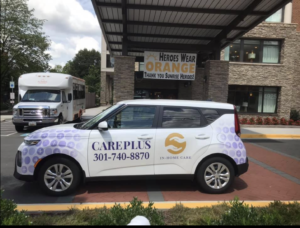
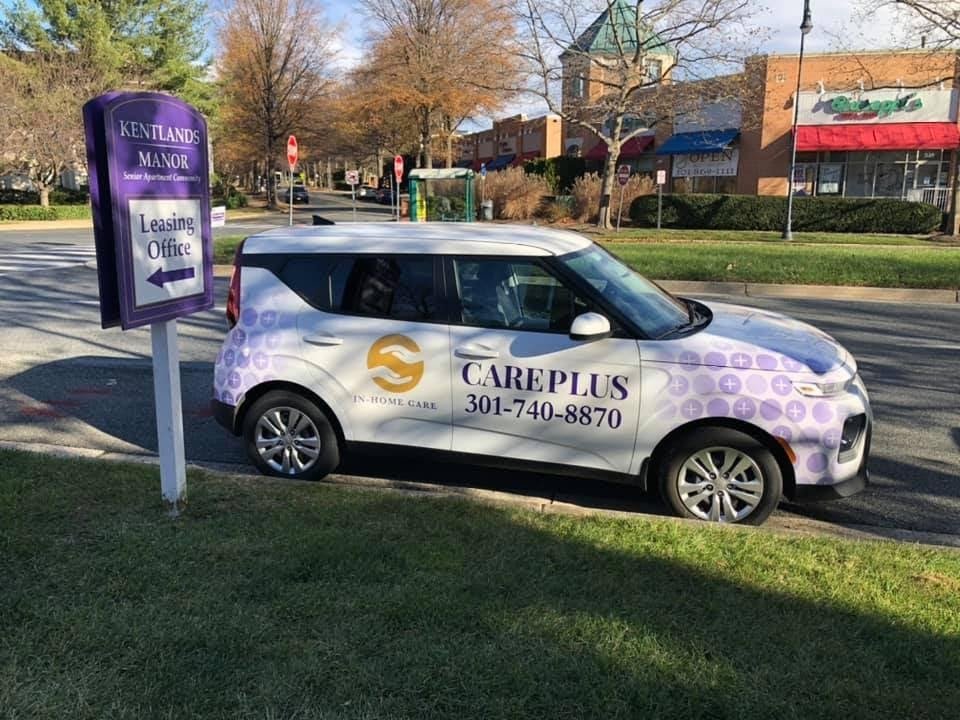
    a CarePlus vehicle outside a senior living facility

    Create Your Own Independent Living Community

    Through our Care Share program, we can help people to age in place in their neighborhood. By working with neighbors, older people can obtain some of the services we offer to independent living communities without having to move. These can include pop-up clinics, lunch and learn programs, and other activities that benefit a group. 

    CarePlus is committed to being a partner in aging in safety and dignity. We strive to bring the most customized and useful range of services to our clients and communities. To learn more about our Flex Care options email info@CarePlusInc.com.

  • Parkinson’s Awareness Month

    Parkinson’s Awareness Month

    April 2021 is National Parkinson’s Awareness Month. At CarePlus Home Health, we have a particular focus on the care and wellbeing of people living with Parkinson’s Disease. In honor of the month, and as part of our Better Care – Better Health Series, CarePlus has undertaken some exciting activities to raise awareness and deepen our own understanding of Parkinson’s.

    #KnowMorePD

    Parkinson’s disease is a chronic, progressive, neurological disease that is estimated to affect approximately one million people in the United States. According to the Centers for Disease Control, Parkinson’s is the 14th leading cause of death in the United States. The Parkinson’s Foundation theme for 2021 Parkinson’s Awareness Month is #KnowMorePD. “The goal of the campaign is to raise awareness about Parkinson’s disease, the Parkinson’s Foundation and all of our available resources that help make lives better for people with Parkinson’s.” 

    A Conversation about Speech and Swallowing


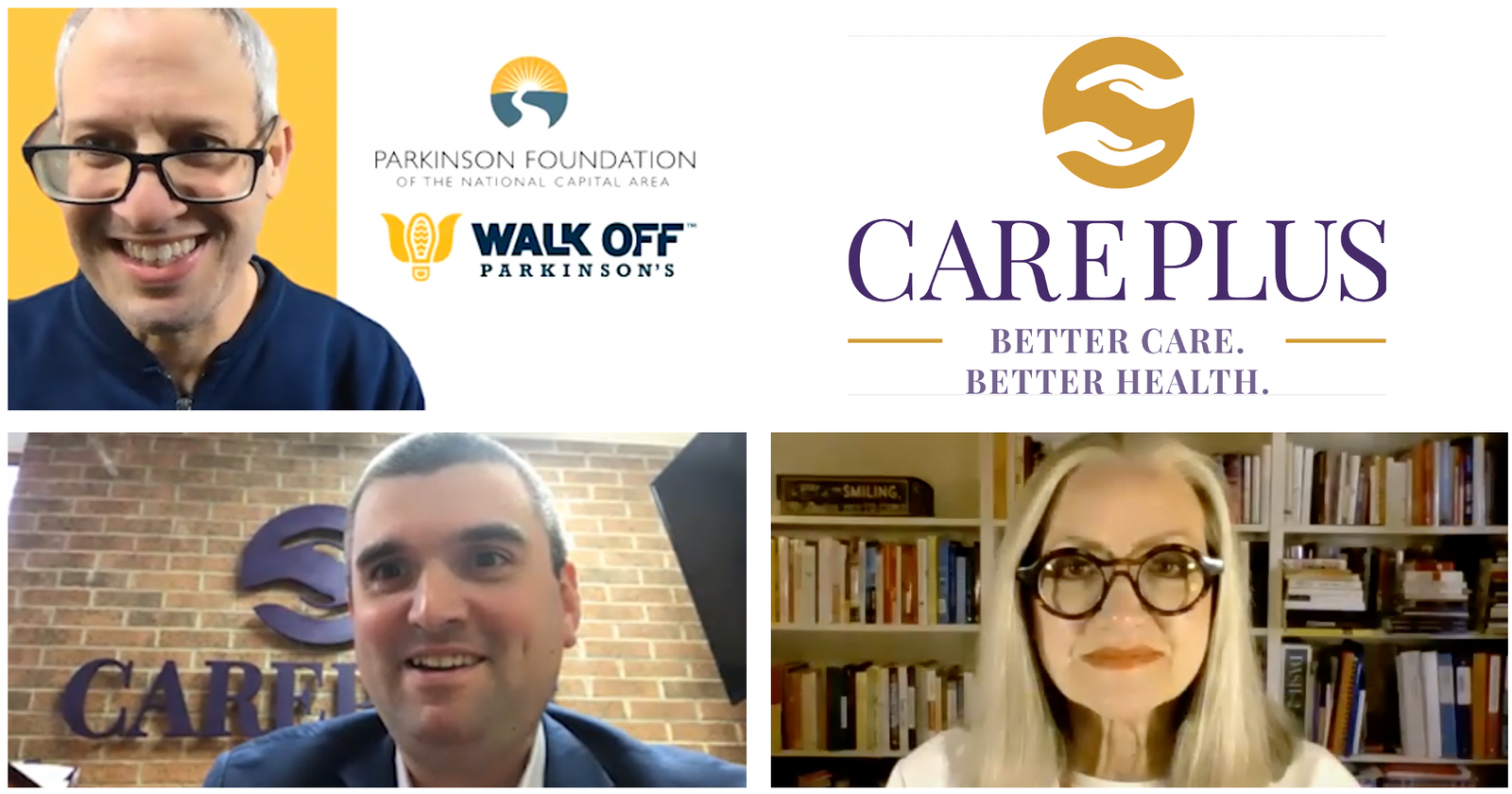
    Andrew Ryan, Executive Director of CarePlus, had a conversation with Susan I. Wranik, a board-certified speech language pathologist and LSVT LOUD Certified Clinician, specializing in the treatment of neurogenic speech, language/memory, and swallowing issues in adults with Parkinson’s. Together, they had a wide-ranging discussion that provided some important information, guidance and resources. In particular, they discussed the LSVT LOUD treatment protocol, which was designed to help people with Parkinson’s to speak in a normal tone of voice. 

    Accessing Local Resources and Education


    Another important conversation occurred between Andrew Ryan and Jared D. Cohen, MBA, President & CEO of the Parkinson Foundation of the National Capital Area (PFNCA). Located in Montgomery County, PFNCA is a wonderful resource for people suffering from Parkinson’s as well as their families. They provide many programs, including virtual wellness activities and dozens of local support groups. The PFNCA Medical Advisory Board has organized the 2021 PFNCA Symposium, featuring over 40 sessions by 37 physicians, and some question-and-answer sessions. In their discussion, Andrew and Jared went into detail about the Symposium and the many educational topics being addressed by experts. 


    CarePlus Provides

    Our Parkinson’s team begins with a nurse assessment who helps put together a customized plan based on individual needs. We then step in to provide a range of assistance that can be medically related (doctor’s appointments, medication reminders), activities of daily living, self-care or other support like walking and meal prep. No person is alike, and our care plans are unique and capable of evolving as the needs of the individual change with the onset of the disease. 

    To get started, call us today at 301-740-8870 or email us at info@careplusinc.com to discuss your needs.

  • Spring Cleaning for Seniors

    Spring Cleaning for Seniors

    The change of seasons isn’t just a change of the weather, but chances for us to make some changes to our homes and lives. Spring cleaning, organizing and getting a fresh start is a great way to start the season anew. We have all been stuck indoors from the cold weather and now we can get a jump start on the tasks we have let go over the winter season. Here are five simple spring-cleaning tips for seniors:

    Tip #1: Plan & Prioritize

    Spring cleaning doesn’t need to be overwhelming! Make a list of items that need to be cleaned or organized and prioritize which are the most important. Don’t forget to call on family members to come over and assist. This will not only complete the list faster but will make for some fun as well!

    Tip #2: Don’t be afraid to de-clutter. 

    Over the years, there are many items in our homes we have stopped using and suddenly there is a lot of clutter! Donate or throw away unused items that have collected to make room for tidiness and order in your home. Clutter can cause a heightened risk of falls for seniors, so this is an important place to start during spring cleaning.

    Tip #3: Do a little at a time. 

    During the planning process, you may realize you have more to do than you initially thought. Everything doesn’t need to be done in just a few days, especially if alone, do a little each day. Use your prioritization list and tackle a few items off the list per week if there is time and relax in between.

    Tip #4: Check expiration dates. 

    Go through medicine cabinets, pantries and any other areas with perishable items. Having expired medication or food around can be dangerous so remembering to throw away and replace expired items is important.

    Tip #5: Check your battery powered safety devices.

    Smoke detectors, carbon dioxide detectors and fire extinguishers are all crucial to a safe home and need to be working properly. Now is the time to make sure you have fresh batteries in your smoke and carbon dioxide detectors and that they are properly functioning. Fire extinguishers expire, so be sure to check the date.

    These spring-cleaning tips for seniors help to promote and maintain independence and quality of life, either in their home or in community settings

    CarePlus Home Health provides in-home care including: assisted daily living, flex care, skilled nursing and 24-hour care. Our mission is to give professional and compassionate care to individuals. Need support for day-to-day activities?  Please call us at 301-740-8870 or visit our website to learn more.

  • In-Home Care Trends

    In-Home Care Trends

    What to expect as we head into 2021.

    We are following recent trends within the aging community and what that might indicate for 2021. Here are a few insights from 2020 leading the way: we are seeing families and caregivers working together to build strong communication networks that serve the needs of individuals and the families they serve; rapid integration of technology to help older adults stay connected; colleagues and referral partners forming collaborative endeavors to serve the aging community; and, professionals and healthcare providers sharing best practices to improve care and protect clients and their caregivers. All of these efforts have produced a safer and more responsive environment for aging adults. CarePlus Home Health is paying particular attention to these shifts and is proud to offer in-home care in Montgomery County, MD to meet and fill those needs. 

    Another important trend of note is that older adults will continue to choose to age in place.  According to an AARP survey conducted in 2018, approximately 87 percent of adults over the age of 65 want to age in place. While the pandemic has forced more service areas to provide digital and virtual options for care, there will always be the need for someone to provide in-home care for day-to-day needs. The growing number of seniors staying in their homes will increase and in turn, this need.

    CarePlus has been providing care for over 25 years. During these unpredictable times, we have included additional PPE training, testing procedures and best practices to protect our clients and caregivers.  We have made an investment and commitment to provide PPE to clients and caregivers to keep our community safe.  Our CarePlus team is working around-the-clock to provide care and safety measures for our community. Additionally, we have focused infection training for in-home caregivers with specific protocols to protect clients, families and caregivers. These practices will become routine and most likely, the standard of care even after a vaccine and the pandemic subside. 

    Caregivers have been key to supporting those in need and this trend will continue. As stated by Bill Dombi, President, National Association of Home Care & Hospice,  “Homecare has distinguished itself in many ways during the pandemic. Caregivers of all disciplines have really stepped up to the frontlines of caring for COVID-19 infected patients while continuing the serve the millions of others who benefit from home care annually. In addition, through significant media coverage, an increased awareness of the value of homecare has emerged in terms of safety, clinical efficacy, convenience and the breadth of services. That awareness has grown in both consumers and the health care community.” In-home care will continue to address the needs of aging adults,  adapt as those needs change, and continue to grow as more adults age in place throughout our communities. 

    We see tremendous growth and advancements in technology and aging.

    Throughout this pandemic, technology has proven to be a life saver.  Many businesses have pivoted to digital ordering and delivery services aimed at convenience and care for seniors. This trend will continue to grow after the pandemic is gone. Technology trends for seniors include telehealth, and better smartphones with health monitoring, artificial intelligence and security/safety features. CarePlus has, and will continue to, support seniors as they set up their telehealth systems, smartphone apps for monitoring home support programs as well as technology for safety and security. Older adults will find software programs for arthritis, blood pressure, falls risk and other medical conditions helpful, and even lifesaving.  

    Voice-activated phones and television software are helpful and vital for families to stay connected and informed as to the safety and location of older adults, ordering supplies or locating a family member.  Convenience with delivery services including meals, medications and consumer items will utilize technology to communicate these needed items.  In many cases, virtual games and entertainment– including Zoom birthday parties and milestone events— will continue to take place. The most important aspect of technology is the ability to stay connected from anywhere. Throughout this pandemic, it has provided connections to family members, near and far, and, of course, brings new meaning to “call your mother”.

    Over the years, colleagues and referral partners have collaborated to serve the aging adults in our community. Immediately following the rise in COVID cases, many professionals throughout our community connected through monthly meetings, organization networking, senior communities, and Zoom calls. There was no hesitation to work together, pick up the phone to discuss the problems and come up with solutions that support each other and the community. This trend will also continue to grow as we work together to accomplish shared goals. This has inspired our upcoming Podcast that will launch in 2021 with colleagues to share invaluable information. 

    As trends arise, we are reminded of the importance to adapt, support and come up with solutions — better care, better health– despite these unprecedented times. As we close the year, we wish all our clients, colleagues, friends and families a safe and healthy holiday season.

    If you need support, please call CarePlus at 301-740-8870 or visit: https://careplus.xenonprime.net/


  • Home Health Care: Five Things to Look for in a Provider

    Home Health Care: Five Things to Look for in a Provider

    It’s a difficult topic to discuss with your family and loved ones: the choice of a home health care provider. However, it is one of the most important decisions you will ever make. 

    So, in order to help guide the decision-making process for a home health care provider, here are five considerations:

    1. Is the staff experienced and licensed? : Thorough screening of prospective caregivers is a priority as you are ensuring the safety of your loved one in their care. Caregivers must have all the up-to-date, certifications, and licenses for the specific care that you require. Your caregiver should be experienced, professional, and compassionate. 
    2. How many years have they been in business? Every business has to start at some point in time yet a caregiver from a reputable company with years of experience is a plus when seeking care for your loved one. In-home health, companies that have been in business for numerous years may have higher retention rates and more experienced caregivers. In addition, established companies tend to have excellent training programs in place to retain compassionate caregivers and grow referrals. 
    3. What services do they offer? : If you are looking for nursing or supportive services, a comprehensive home healthcare provider should be able to deliver a wide variety of services.  Among those services may be hourly and live-in home care services either at home or at an assisted living facility or nursing home. Care Plus provides both in-home care and nursing home services. Our services are customized to meet the needs of the patient and their families. It may be a short-term or long-term plan. Avoid “cookie-cutter” or “one size fits all” service providers. Each patient is unique and deserves a customized plan that will meet their unique needs.
    4. What do the reviews say? : Reviews are a reliable resource that can be quite helpful to you as you weigh the different caregiving choices. Home health care providers that have been in business over the years, should have an extensive list of online reviews.   You can visit the www.caring.com, Better Business Bureau (BBB), Yelp, Google My Business, and Facebook should have client reviews posted on their pages. The caregiver website should have testimonials posted, too. We also recommend that you call the caregiver and ask for references.
    5. What do they provide for Alzheimer’s and dementia patients? Make sure the caregiver offers services for Alzheimer’s or dementia patients. As older adults age this may be a need and having an In-Home Healthcare provider who is attuned to early signs of dementia is imperative. Check with the company to verify that the caregivers have specialized training in these health conditions.

    It will give you peace of mind knowing that they have the best care available. These five tips will prepare you for your next steps. If you should have any questions feel free to reach out.

    CarePlus Home Health, Inc. has experienced and compassionate home health caregivers. Call us at (301) 740-8870 for a consultation. We offer home care in the Montgomery County, MD area. 

  • Making Technology Accessible For Seniors

    Making Technology Accessible For Seniors

    The world continues to shelter in place, and even though there is some movement to begin to relax strictest rules, health and safety mean that people are continuing to use technology at home instead of venturing out. At-risk populations, particularly seniors, need to understand and embrace technology to be able to live their best lives. This isn’t always easy. An article published by Forbes, notes that frustration with technology makes “older adults unsure of their ability to use it, leaving them unmotivated to even try.” Luckily, these days, there are some simple solutions that can help seniors adopt technology.

    Simplify Your Machine

    While a personal computer (PC) or a laptop may have multiple uses, sometimes they can be overwhelming. Updates, plug-ins, configuration, and maintenance requirements aren’t easy to understand, and navigating them can feel like it takes an advanced degree in computer science. Enter the simpler alternatives. A recent article on CNET, Here’s the best computer for seniors and elderly parents, reviewed some great alternatives for seniors. The article suggests Chromebooks and iPads that each offer basic functionality – internet access, email, Facebook and other applications most frequently used by seniors. These options are inexpensive and relatively simple, so they present an excellent alternative for a senior wary of tech.

    Dedicated Devices

    If technology appeals to a senior for certain, specific uses, there are some great, inexpensive devices out there that fulfill that need with some additional functions. The Amazon Fire Tablet is meant for use as an eReader (a device that allows you to read books published in electronic form), which has the added advantage that the print can be enlarged for easier reading. The Amazon Alexa Show can be operated by voice controls to make video calls to other echo devices. Similarly, Facebook Portal is a video calling device that is voice controlled and easy to use. While intended for a primary purpose, each of these devices have additional uses like watching tv, accessing Facebook, and connecting to other compatible apps.

    The Right Instruction

    Lifelong learning is the key to getting comfortable with the latest technology. However, not all classes are designed with the perspective and experience of seniors in mind. Medicare.org makes several suggestions for websites that offer courses helping seniors learn technology. Another resource is YouTube, which posts videos of varying lengths and detail. Relevant videos can be accessed by making sure to specify “for seniors” in the search. Finally, there are books. For example, the well-known “for dummies” introductory series, includes an entire subset for seniors, such as iPad For Seniors For Dummies, by Dwight Spivey.

    Safety First

    When diving into the tech world, be wary of security. Technology opens up the world and scammers and thieves make up a part of it. This can be in the form of a spam email, or a pop-up ad on the internet. The Cybersecurity & Infrastructure Security Agency (CISA), in cooperation with the National Cyber Security Alliance, has an initiative called “Stop. Think. Connect” that includes resources for older Americans. Among the suggestions on the CISA website are precautions about choosing passwords, holding on to your mobile device, being cautious about privacy settings, and divulging personal information online.

    With the amount of resources available today, even the most tech-averse person can get connected. Being able to stay in touch with friends and family, surf the web, read a book or finally write that novel has never been easier.

    At Care Plus, we provide services caring for older adults so they can live their best lives as they age in place.  Learn more about Home Health Montgomery County.

  • May is National Stroke Awareness Month

    May is National Stroke Awareness Month

    According to the National Institutes of Health, “Each year in the United States, there are more than 800,000 strokes.”

    Strokes are the fifth leading cause of death in the United States, according the Centers for Disease Control. More than any other disease a stroke can cause serious, long-term disabilities. The American Heart Association Stroke Council (ASC) says that stroke victims are vulnerable to repeat strokes.

    CarePlus Home Health would like to offer you a few tips on how to recognize stoke-like symptoms and the necessary steps to take to reduce the risk of having a stroke.

    What is a Stroke?

    When a major blood vessel in the brain is either blocked by a clot or bursts, a portion of the brain cannot get the blood it needs, causing brain cells to die.

    This is a stroke.

    What Causes a Stroke?  

    The two-most common types of strokes are hemorrhagic and ischemic.

    • A hemorrhagic stroke occurs when a weakened blood vessel in the brain ruptures. High blood pressure is the most common cause of a hemorrhagic stroke.
    • An Ischemic stroke occurs when a blood vessel supplying blood to the brain is obstructed. According to the ASC, ischemic strokes account for 87% of all strokes.

    When a person has a stroke, depending on where in the brain the stroke occurs, the part of the body controlled by that part of the brain cannot function. Short of death, strokes can cause paralysis, loss of vision, memory loss as well as other possible outcomes – some of which are irreversible.

    Remember to ACT FAST!

    Medical intervention is needed as quickly as possible when experiencing stroke symptoms.

    According to the Mayo Clinic, an ischemic stroke requires specific pharmaceuticals to break up the clot in the brain; medication should be administered “within 4.5 hours from when symptoms first started if given intravenously.

    The sooner a stroke patient is treated with medication, the better. Quick medical treatment may not only improve a stroke victim’s chances of survival, additional medical complications may be avoided.

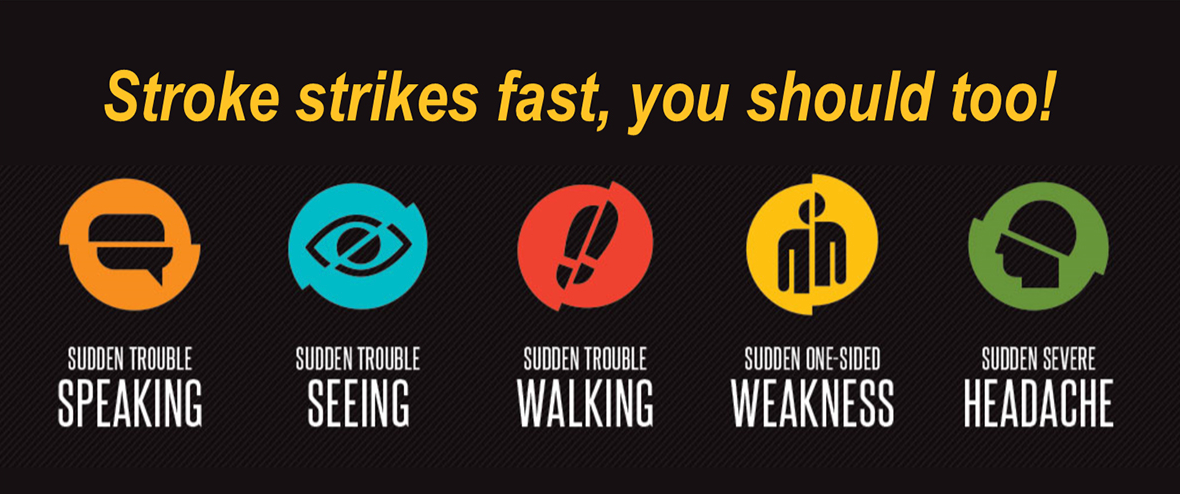
    According to the Centers for Disease Control, the acronym F-A-S-T can help you remember stroke symptoms. 

    F = Face drooping: Ask the person to smile. Does one side droop?

    A = Arm weakness: Ask the person to raise both arms. Does one arm drift downward?

    S = Speech difficulty: Ask the person to repeat a simple sentence. Are their words slurred?

    T = Time to call 9-1-1: If the person shows any of these signs, call 9-1-1 immediately. Stroke treatment can begin in the ambulance.

    Additional stroke symptoms include dizziness; loss of balance or coordination; trouble walking; problems seeing out of one or both eyes; severe headache; numbness of the face; and sudden confusion or trouble understanding others.

    Keeping in mind the FAST signs (see above), it is imperative to contact emergency services as soon as possible if you or someone else displays any stroke symptoms.

    Do NOT Let COVID-19 Prevent You From Seeking Treatment

    Millions of Americans are rightfully following the CDC’s social distancing guidelines with respect to COVID-19; however, these social distancing measures should not prevent you from getting emergency medical attention should you experience stroke-like symptoms.  

    Call 911!

    Emergency medical technicians (EMTs) are trained to assess your condition and take immediate steps to hospitalize someone having a stroke. The risks associated with not obtaining treatment for a stroke far outweigh the potential exposure to COVID-19, particularly when healthcare professionals involved – from the EMT to the treating doctors and nurses – are made aware of any underlying health concerns (e.g., a compromised immune system).

    Take Care of Yourself!

    The CDC offers the following stroke prevention guidelines:

    • Eat a healthy, low-sodium diet; include plenty of fruits and vegetables;
    • Maintain a healthy weight;
    • Be physically active.
    • Do not smoke;
    • Avoid secondhand smoke;
    • Limit your alcohol use;
    • Prevent or manage your other health conditions, especially high blood pressure, high cholesterol, diabetes, and obesity.

    Some contributing strokes factors – age, race and gender, for example – are outside of your control. Living a healthy lifestyle, however, can help prevent you or your loved one from having a stroke.


  • Skilled Nursing: Available in Your Home

    Skilled Nursing: Available in Your Home

    When a person is recovering from an injury, surgery, or illness or stroke, there is often a period when they are ready to leave the hospital, but not ready to leave medical care. This gap is filled with skilled nursing.

    In many cases, skilled care can be provided in the person’s own home and can actually be a better option. Utilizing a home health care provider enables an older person coming out of the hospital to receive highly effective medical treatment while being as independent as possible in the comfort of their own home.

    Skilled nursing is medical care provided by a Registered Nurse (RN) or a Licensed Practical Nurse (LPN). A person who has been hospitalized transitions to nursing care when they no longer need to see a doctor every day or use sophisticated medical equipment, but do need more specialized care than an aide can provide. An RN or LPN can respond to rapidly changing health conditions and can perform complex wound dressings, rehabilitation services, tube feedings, and other highly skilled procedures. 

    The CarePlus Home Health, Inc. skilled nursing team includes a Registered Nurse, a Licensed Practical Nurse, a Certified Nursing Assistant, and a Geriatric Nursing Assistant plus specialists in particular diseases: COPD, pneumonia, and other respiratory conditions, cardiac conditions, diabetes, Alzheimer’s Disease, Amyotrophic Lateral Sclerosis (ALS), Multiple Sclerosis, and Parkinson’s Disease.

    In-home nursing can be especially good for an older person who has ongoing difficulties with memory or mobility or for someone who is already receiving Assisted Daily Living at home. It allows the nurse to coordinate more closely with the home care service provider, who is on the spot and not attending to a group of other patients. The nurse and the caregiver can update each other more efficiently on the person’s health status and keep instructions current for diet, medication, and exercise more easily. And in-home skilled care can provide the person with the sense of security that comes from familiar surroundings.

    A wide range of services can be provided in the person’s home, including wound care, catheter care, ostomy care, ventilator care, injections, medication management, and tube feedings. Specialists, physical therapists, and occupational therapists can also visit the home.

    When prescribed by a doctor, these services may be covered on a short-term basis by Medicare, some private health insurance policies, veterans’ benefits, and long-term care insurance policies, whether they are provided in a facility or at home.

    Check with Medicare to find out about your loved one’s particular situation. In some cases, Medicare can cover physical or occupational therapy, speech-language pathology services, social services, medications, and medical equipment and supplies used. It may even cover ambulance transportation to a medical center that provides these services in the event they can’t be provided at home.

    If your older loved one is facing a hospitalization, ask their doctor if skilled care at home will work for them. Use these criteria for in-home health care to choose a provider. And feel free to contact CarePlus, Inc. for more information by calling 301-740-8870 or by using our contact form.