Category: All

  • CarePlus: Simply the Best of Home Care Agencies

    CarePlus: Simply the Best of Home Care Agencies

    Earlier this year, CarePlus won the Best of Home Care Provider of Choice award. We were one of only 18 sites in Maryland to make the list. The award was made by a professional evaluation firm that we engaged to collect monthly feedback from our clients and give us suggestions for improvement.

    One important reason that people hire home care agencies rather than hiring individual providers on their own is that agencies screen, interview, and test caregivers, check their references, and run a background check. The family of an older person does not have to do this work to feel that their loved one is in safe hands, and in most cases the agencies have already had positive experiences with the caregiver. (See the CarePlus qualifications and guidelines for prospective employees.)

    In the same way, people deserve to know that the home care agencies they are considering have been vetted, tested, and reviewed. To meet this need, agencies like CarePlus engage outside evaluators to tell them how they can improve and to tell the public how they compare with other agencies. These evaluators speak with older people in the agency’s care or their families, report to the agency with feedback and suggestions for improvement, and share their ratings with the public, especially those looking for home care services of their own.

    To ensure that we’re giving the best service possible, CarePlus has engaged Home Care Pulse, the home care field’s leading firm in satisfaction research, to poll our clients and let us—and prospective clients—know how we’re doing. Every month, Home Care Pulse speaks with a percentage of clients we serve and asks them about the quality of service provided by our caregivers, communications with our office staff, the impact of our services on their daily lives, and other issues. Every month, they provide us with a report and post the results on their website, Best of Home Care.com. This year, they designated CarePlus a Provider of Choice.

    To win this rating, CarePlus had to qualify as a Home Care Pulse Certified Trusted Provider™ for at least six months and receive higher ratings than others in the field during that time. We agree on the percentage of our clients or their families to be contacted by Home Care Pulse, but we cannot specify which clients will be interviewed. Conversely, clients and their families cannot provide a spontaneous review, whether positive or critical; respondents are selected randomly by Home Care Pulse.

    Those we serve say that our caregivers are thoughtful, compassionate, flexible, and good at following instructions. They appreciate our office staff for their consistent communication, their efficiency, their help with solving new problems, and their connections to outside resources.

    CarePlus is also ranked on Family Assets as 2 out of 9 total home care home care agencies in the city of Gaithersburg, 18 out of 158 home care providers within a 20-mile radius, and 16 out of 177 home care providers within the state of Maryland.

    Starting August 14 through September 13, the Readers’ Poll for Best of Bethesda will be open. There are quite a few categories that support our aging community in Bethesda and the surrounding areas. You will have the opportunity to vote CarePlus as the best In-Home Care Provider. We hope to raise awareness and share our expertise to support families in our community.

    Vote CarePlus best In-Home Care in the Best of Bethesda Readers’ Poll for 2020. Click here to vote.

    Home care is our passion and for nearly almost 25 years, we have taken pride in providing our clients in Montgomery County and the surrounding area with excellent home care services by highly trained, trustworthy and compassionate caregivers. See assisted daily living at home and our other services.


  • Getting Help With Alzheimer’s:  Is It Time for Dementia Care?

    Getting Help With Alzheimer’s:  Is It Time for Dementia Care?

    Alzheimer’s disease is a type of dementia that causes problems with memory, thinking, and behavior. It is irreversible and progressive; over time it erodes memory and thinking skills and the ability to perform simple functions. Alzheimer’s disease proceeds through several stages, and each stage requires a different type of care and support. When a person has been diagnosed with Alzheimer’s, they probably have two to four years before they will need dementia care. That is why the early stage is the ideal time for the family to make a care plan for the future. It allows the person with the disease to participate in the planning.

    The three stages of Alzheimer’s—preclinical, mild to moderate, and severe—are marked by different symptoms and different needs. A person in the preclinical stage may show few or no signs of having the disease. There may be minor memory lapses, like forgetting where things are kept, which most people experience with age or even stress. At this stage, testing may not show any indication of Alzheimer’s. The person may need minimal assistance, like help with remembering medications and paying the bills, but very often, they function well.

    In the mild to moderate stage, the person’s difficulty, not only with memory, but also with concentration becomes more noticeable. They may not be able to perform tasks or plan and organize projects. They may forget recent events or parts of their personal history, lose valuable objects, or show poor judgment with money or health habits.

    These symptoms increase over the next few years, during which friends and family may begin to see personality changes as well. The person may become moody or withdrawn, particularly when surrounded by people. A doctor’s examination at this stage will detect clear symptoms and render a diagnosis. At this point, a person with Alzheimer’s will need dementia care from trained caregivers.

    Families have a number of options for caregiving and support at this point. Adult day centers provide a safe environment during the day while family members are at work, as well as structure, mental and sensory stimulation, and the opportunity to socialize with other seniors. Many also provide meals and transportation. Home care services are another option that gives family caregivers much-needed breaks by providing supervision, meal preparation, medication reminders, and vital companionship in the person’s own home.

    As the disease progresses, more advanced home care will be called for. Home care allows a person with Alzheimer’s to remain at home among familiar surroundings, even when they need help dressing, eating, and bathing. (See Home care services  at CarePlus, Inc.)

    Dementia home care is geared specifically towards those with Alzheimer’s disease and related dementias. Dementia care offers the same assistance as regular home care, but in addition dementia, caregivers are familiar with the stages of the disease, what to expect from the person who has it, strategies to deal with behaviors that cause problems and safety issues related to these changes. A dementia care plan can be tailored specifically to the likes, dislikes, and personal needs of the person with Alzheimer’s and can also help them engage in activities that stimulate memory and interaction. (CarePlus, Inc. offers a specialized program for Alzheimer’s and dementia care.)

    A dementia caregiver can also help the family understand what is happening, how to respond, and how to head off interactions that tend to distress or agitate a person with Alzheimer’s. For example, it is helpful to provide a calm and orderly physical environment, to structure a day according to an older person’s energy levels and make the schedule consistent, and to provide and encourage sensory experiences like listening to music. It is not helpful to argue about facts or carry on a conversation with the television on. A dementia caregiver can help family and friends adjust to their loved one’s new needs.

    An assisted living community may be another option for an older person with Alzheimer’s. Assisted living allows an older person to live in a private apartment in a center or community with other seniors while being able to check in with round-the-clock staff and receiving on-site services such as dining, housekeeping, laundry, recreational and social activities, and transportation.

    Memory care units are also helpful for people with Alzheimer’s or dementia. A memory care unit is a floor or wing of a larger care residence with staff who have received specialized training in care for the special needs of people with Alzheimer’s and other memory problems and includes safety measures like secured exits.

    During the severe stage, a person with Alzheimer’s proceeds from memory loss to an inability to communicate or to sequence the steps for physical action or personal care. They may recognize faces, but not remember names or what their relationship to the person is. Personality and behavior changes may be compounded by delusions and paranoia. In the severe stage, patients can also wander and lose weight.

    If a person with Alzheimer’s is not already receiving 24-hour care at this stage, they will need to move to residential care or a nursing home. Nursing homes provide room and board, skilled nursing care, (see skilled nursing care available from CarePlus) and round-the-clock supervision.

    Almost 6 million people in the United States live with Alzheimer’s and other dementias. Alzheimer’s alone is the sixth-leading cause of death in the country. There is currently no way to prevent it or cure it, but there are changes that people can make to better live with Alzheimer’s, and there are medications that help slow the progress of the disease and ameliorate symptoms.

    June is Alzheimer’s and Brain Awareness Month. Individuals and organizations across the world are organizing activities and fundraisers to promote research and treatment for Alzheimer’s and training for caregivers and family members. These activities culminate in The Longest Day on June 21st—the summer solstice—organized by the Alzheimer’s Association to connect thousands of participants taking the action of their choice to fight Alzheimer’s disease. If you are planning an event or would like to, check in with the Alzheimer’s Association’s website at The Longest Day.

  • Living. Independence. Arthritis.  We Got This!

    Living. Independence. Arthritis. We Got This!

    The natural progression of aging often results in slowing down in speed, limiting the range of motion, lessening flexibility, and more challenges with everyday tasks. A diagnosis of arthritis may complicate the aging process due to its impact of pain and inflammation. An in-home caregiver may be the solution to the burden of simple everyday tasks, medication management, quality of life, and living independently.

    With arthritis, it may hurt to stand, to walk, to reach for dishes, clean pots, and even open the fridge door. Pain presents difficulties for self-care, including meal prep, bathing, driving, or laundry. In some cases, extra support may be needed for those diagnosed with arthritis to maintain aging in place and living independently. Living independently with arthritis may look a little different, but with the right caregiver and the proper level of support, individuals can maintain their independence and promote their health and wellness.

    Arthritis is an inflammation of the joints. It can be caused by wear and tear of cartilage, which normally acts as a shock absorber as we walk, run, and otherwise move through our daily lives, but it can also be triggered by an autoimmune disease or infection.

    According to the Arthritis Foundation, there are more than 100 different kinds of arthritis1. The types most likely to affect the older person in your life are Osteoarthritis, or degenerative joint disease, a chronic condition in which the cartilage that usually prevents joint bones from rubbing together breaks down, and Rheumatoid Arthritis, an inflammation of the lining of the joints. Both of these types cause stiffness, loss of movement, and pain which can lead to disability.

    There is no cure for arthritis at this time, but there are ways to manage the inflammation and pain. According to the Mayo Clinic, there are some Do’s & Don’ts for better management2. By taking a multifaceted approach to management including drug therapy, physical therapy, exercise, a healthy diet, and proper sleep habits, there is a greater likelihood of reducing pain, improving mobility, and preventing further joint damage.

    According to the Arthritis Foundation, the key to living with arthritis is self-management. The people who are most successful eat a balanced diet with an emphasis on particular foods, engage regularly in low-impact and range-of-motion exercise, practice healthy sleep habits, and manage their pain, not only with medication, but also with non-medical techniques and natural therapies like heat, ice, water, and massage therapies.

    All of these disciplines become more difficult as we age. For those older people contending with memory issues, therapy can be more challenging. Home care service agencies can help set up a program for an older loved one and provide a trained caregiver to ease confronting each and every day.

    People with arthritis need to increase the proportion of fruits and vegetables in their diet, eat more fish and less red meat, and eat more foods with omega-3 fatty acids. Your home care service provider can buy the foods known to reduce inflammation, avoid the foods that increase it, and prepare regular, healthy arthritis-friendly meals that won’t aggravate your loved one’s pain.

    Exercise relieves stiffness, reduces pain and the fatigue it causes, and increases muscle and bone strength. Appropriate exercises may include low-impact aerobics, strength training, and range-of-motion exercises. If surgery like a knee replacement or hip replacement is recommended, a home care provider can be available to assist with housekeeping tasks during pre-surgery preparation or a transition from the hospital, and help with simple exercises that support an older person to recover and regain mobility.

    Sleep is also important for joint health and pain management. A home care provider can help make and maintain small changes that support sleep like keeping the bedroom dark, cool, and quiet, helping an older person avoid evening exertion that might keep them awake, or helping an arthritis sufferer into a warm bath before bedtime.

    Home care services include many other ordinary tasks that remain too painful for an older person with severe arthritis to do. These include:

    • Bathing
    • Dressing
    • Personal Hygiene
    • Housekeeping and laundry
    • Transportation and escorts to appointments
    • Coordination with various providers and agencies

    In addition, a home care service provider introduces a new source of companionship and emotional support, not only for the older person with arthritis, but also for their family.

    Also, as one ages, the risk of falling increases. According to the CDC, each year over 300,000 older people—those 65 and older—are hospitalized for hip fractures3. Thus, taking extra precautions around the home to avoid falls is essential. A caregiver can help to remove fall risks for families including clutter, rugs, clearing walkways, especially to the bathroom for evenings, tripping over cords and assess proper shoes. 

    We want to make our clients more comfortable physically and provide fall prevention.

    If you have questions about home care for an older loved one with arthritis or if you are looking for a home caregiver in Montgomery County, feel free to contact us at (301) 740-8870. Or use the contact form on this web site.

    References:

    https://www.arthritis.org/living-with-arthritis/pain-management/understanding/types-of-pain.php

    https://www.mayoclinic.org/diseases-conditions/arthritis/in-depth/arthritis/art-20046440

    https://www.cdc.gov/HomeandRecreationalSafety/Falls/adulthipfx.html


  • Elder Care, Assisted Daily Living, and Aging in Place

    Elder Care, Assisted Daily Living, and Aging in Place

    You may have begun to wonder if your older loved one needs professional elder care. They often don’t answer the phone, even when you’re certain they’re home, and when they do, they seem confused. They miss medications and doctor’s appointments. They don’t seem to cook much anymore, and they leave dishes in the sink too long.

    If you work or you don’t live with your loved one, you may not feel that it’s safe for them to spend too much time alone. And if you’re there most of the time, there may be limits to what you can do yourself. What will it be like to have people outside of the family inside your loved one’s home? How can you prepare?

    There’s a lot you can do to make daily life safer and healthier for your loved one while you research elder care options. Spring is a great time to start house cleaning and home renovations that will make it safe for your loved one to move around the house.

    1. Clear the way for your loved one to move. Ensure that there’s a 36-inch passage through all parts of the house. Both outside and inside doors should open all the way. Talk to your loved one about decluttering and discuss respectfully anything you think is ready to go.
    2. Help prevent falls. Secure rugs with non-slip pads or double-sided rug tape. Make sure all entryways, passages, rooms, and the garage are properly lighted. Make sure that all handrails are secure, and have second railings installed on the stairways. Have grab bars professionally installed near the toilet and in the shower or tub, install non-slip strips, and remove soap build-up frequently. Check out agencies in your area to see if there’s a fall prevention class, and talk to your loved one about taking them to it so that they can be more independent about ensuring their own safety. The Mayo Clinic provides simple tips to prevent falls as well.
    3. If cluttering has turned to hoarding, get professional help (also available at CarePlus). Hoarding is an illness that is not helped by throwing everything away.
    4. Prepare for emergencies. Place a lamp and a telephone near the bed. At least one window, as well as the door, in every room, should be easily reachable in case of fire.
    5. Do a reality check about driving. If your loved one still drives and you’re doubtful, talk about changes in their driving skills. Are they reluctant to drive at night or on the highway? Are they no longer comfortable making left turns? If a discussion or a doctor’s visit suggests that it’s getting time for them to give up driving, help them plan ahead. What transportation is available and which do they prefer? How will they get to each place they need to go?

    Once you’ve done all you can, professional home care providers can help with daily chores. Consider home care. It allows your loved one to continue living the life they want in their own home and provides an additional source of emotional support.

    1. For an older loved one who is still ambulatory, a home care provider will make the meals, wash the dishes, tidy the house—removing obstacles and reducing the risks of falling—do laundry and other light house cleanings, remind your loved one when it’s time to take medications and drive them to appointments, grocery stores, and social activities.
    2. Some care providers can help your loved one with strength, stamina, and range of motion exercises that will help them stay stronger, longer.

    Your loved one may need more advanced assisted living services and physical support to remain at home.

    1. Home care can include helping your loved one eat, as well as preparing the meal, helping them in and out of bed or lifting them to change position in bed, bathing and dressing them, and assisting with difficult issues like incontinence.
    2. Agencies like CarePlus, Inc. can expand all these services into 24-hour assistance. Staying overnight in your loved one’s home allows caregivers to respond to sundowning episodes and track changes in thinking or behavior.

    Turning this work over to professionals actually gives your older loved one more dignity and clears the way for you and your loved one to focus on the personal relationship rather than practicalities.

    CarePlus, Inc. has been providing excellent home-based elder care services to Montgomery County and the surrounding area for the past 20 years. We take pride in the highly trained, trustworthy and compassionate caregivers who work with us. Contact us for more information!

  • Putting Families First: Parkinson’s Care Program

    Putting Families First: Parkinson’s Care Program

    Your loved one has been living with Parkinson’s or Parkinson’s + Dementia, CarePlus can help.

    Our client Roxanne J. shares about the assistance Tom provided in managing her life before Parkinson’s. In addition, she shares her gratitude for the caregivers at CarePlus Home Health in helping manage her activities of daily living after her onset of Parkinson’s.


    Roxxane J: “Tom, I think the most value that you have brought to me was that I worked with your personal trainer. I was able to lose 30 pounds and 30 points off my diastolic numbers in just about a year and a few months. That was the best thing that happened for me. But you’ve been very friendly and made me feel welcome in your office. And I have appreciated all that you’ve done in making sure that I was safe. Now, I’ve had an illness which requires quite a bit of help. I’ve had people like, Ummi, and others come into my apartment and help me do laundry, changing of sheets. And also, now you are bringing me my medications two times a day. And that has made me very healthy again. I am very happy with what has happened with my progress in such a short time and it is all because of CarePlus’ attention.”

    At CarePlus Home Health Inc., home care is our passion.  At CarePlus we recognize all our clients and value the importance of the service we provide. It is imperative to make the right fit for your family.  For the past 20 years, we have provided our clients in Montgomery County, MD and the surrounding areas with excellence, compassion and understanding. Our mission, to provide professional, compassionate care to individuals, while maintaining their independence and quality of life, in their home or community settings.

    If you are interested in learning more about our home care services including:  assisted daily living services,  bathing, companionship, dressing, exercises, grocery shopping, housekeeping/laundry and live-in support – please contact us at (301) 740-8870 or info@careplusinc.com.

  • Putting Families First: Dementia Care Program

    Putting Families First: Dementia Care Program

    Our Dementia Care Program offers a wide range of care services for loved ones who have forgetfulness and who are confused and tend to wander. 

    Sandra H., shares about the many ways the different caregivers at Care Plus Home Health have been extremely helpful in assisting with all of her activities of daily living.

    “I’ve had multiple caregivers and right now Jane is my last one, and she’s been very good to me. I had somebody else but I can’t even remember what her name is because like I said, I’m very forgetful. She remembers. She cooks. She does some cleaning for me. She keeps me honest.”

    At CarePlus Home Health Inc., home care is our passion.  At CarePlus we recognize all our clients and value the importance of the service we provide. It is imperative to make the right fit for your family.  For the past 20 years, we have provided our clients in Montgomery County, MD and the surrounding areas with excellence, compassion and understanding. Our mission, to provide professional, compassionate care to individuals, while maintaining their independence and quality of life, in their home or community settings.

    If you are interested in learning more about our home care services including:  assisted daily living services,  bathing, companionship, dressing, exercises, grocery shopping, housekeeping/laundry and live-in support – please contact us at (301) 740-8870 or info@careplusinc.com.

  • Putting Families First: 24 Hour Programs for Montgomery County Seniors

    Putting Families First: 24 Hour Programs for Montgomery County Seniors

    Who’s going to care for your loved one around the clock? CarePlus is here to help.

    Our 24 Hour Care Program provides care for individuals who need around the clock care.

    Guy B. shares his experience at CarePlus Home Health:

    “I’m living here and my wife is here with me. She’s ill and she’s being taken care of by CarePlus, which I’m very happy about. They have done such an outstanding job for me since I was here.

     I’ve had my wife in two or three different places, to be taken care of and they never took care of her like you folks do. So I’m just excited about the fact that she’s happy and she seems to be getting along. This disease she has, mental disease, is not curable but she seems to be happy in her whereabouts and so that makes me happy.

    My life has changed ever since I came into your care, with CarePlus. It’s made me realize that there are decent people around who can take care of sick people and do a fantastic job like you do.”

    At CarePlus Home Health Inc., home care is our passion.  At CarePlus we recognize all our clients and value the importance of the service we provide. It is imperative to make the right fit for your family.  For the past 20 years, we have provided our clients in Montgomery County, MD and the surrounding areas with excellence, compassion and understanding. Our mission, to provide professional, compassionate care to individuals, while maintaining their independence and quality of life, in their home or community settings.

    If you are interested in learning more about our home care services including:  assisted daily living services,  bathing, companionship, dressing, exercises, grocery shopping, housekeeping/laundry and live-in support – please contact us at (301) 740-8870 or info@careplusinc.com.


  • Putting Families First: Home Care Assisted Daily Living for Gaithersburg Seniors

    Putting Families First: Home Care Assisted Daily Living for Gaithersburg Seniors

    Home care services may include assisted daily living, advanced care and special programs for families who have a family in need. The trend in care for independent living and aging in place, is to provide compassionate, responsive and dependable care for seniors in their home. 

    The U.S. Centers for Disease Control and Prevention defines aging in place as “the ability to live in one’s own home and community safely, independently, and comfortably, regardless of age, income, or ability level. It is the trend as many seniors prefer staying in their home where it is safe, familiar and comfortable.”    

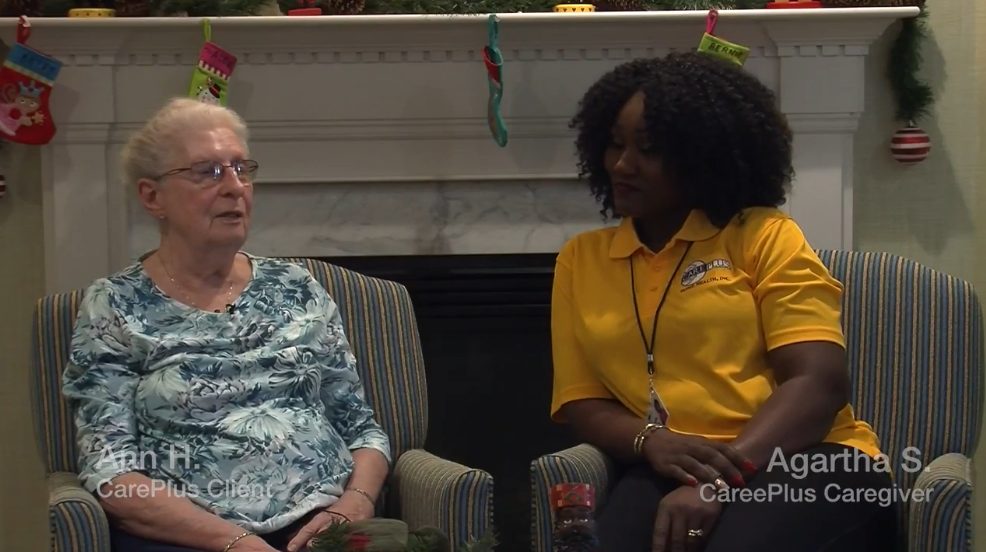
    Our own home care resident, Ann Hill, shares her feedback.

    “My name is Ann Hill. Agartha is my aide, and she is very, very helpful. I really like working with her. She’s pleasant, and helpful, and does many things for me such as: give me a shower, do the laundry, clean up the bathroom.”

    At CarePlus Home Health Inc., home care is our passion.  At CarePlus we recognize all our clients and value the importance of the service we provide. It is imperative to make the right fit for your family.  For the past 20 years, we have provided our clients in Montgomery County, MD and the surrounding areas with excellence, compassion and understanding. Our mission, to provide professional, compassionate care to individuals, while maintaining their independence and quality of life, in their home or community settings.

    If you are interested in learning more about our home care services including:  assisted daily living services,  bathing, companionship, dressing, exercises, grocery shopping, housekeeping/laundry and live-in support – please contact us at (301) 740-8870 or info@careplusinc.com.


  • Alzheimer’s and Dementia Care

    Alzheimer’s and Dementia Care

    In 1983 President Ronald Reagan established November as Alzheimer’s Awareness month. At that time, there were approximately two million people suffering from the disease. Today that number is over five million and growing. It was hoped that by devoting awareness to this devastating disease there would be an increase in research, education, collection of data and valuable information for those who suffer from the disease, treat the disease and care for those with the disease. While much has been looked at, there is still much to be done. 

    The Alzheimer’s Association (Alz.org) provides the following compelling facts and figures about the magnitude and impact of this disease:

    1. Alzheimer’s disease is the 6th leading cause of death in the United States.
    2. 16.1 million people provide unpaid care for people with Alzheimer’s or other dementias.
    3. 18.4 billion hours of care are provided by unpaid caregivers. 
    4. Between 2000 and 2015 there was a 123% increase in those with Alzheimer’s disease. 
    5. If Alzheimer’s could be diagnosed accurately and early enough, medical and care cost savings could total up to 7.9 billion dollars. 

    While the cost to society is great and continues to grow rapidly, those with the disease –and their families and caregivers —will continue to fight the disease each and every day. They are joined in their fight by researchers, medical professionals and ever changing technology. For more information:

     https://www.nia.nih.gov/about/advances-alzheimers-disease-related-dementias-research 

    While waiting for research and a cure, education and early intervention remain crucial.

    Learning the signs of Alzheimer’s can increase and improve better outcomes.

    The National Institute on Aging/National Institute of Health notes that a person, while healthy may have more difficulty navigating a complex world and has several symptoms that should be not be overlooked. Some of the symptoms may include:

    1. Memory Loss that impacts day to day activities
    2. Poor Judgement leading to inappropriate decisions
    3. Loss of spontaneity and sense of initiative
    4. Repeating Questions
    5. Difficulty handling financial affairs
    6. Losing a sense of direction, getting lost, trouble with time
    7. Losing or misplacing items
    8. Mood and personality changes, changes in social activities
    9. An increase in anxiety and aggression

    Consult a medical professional if you, or your loved one might be experiencing some of the above symptoms. 

    Are there opportunities to reduce the risk of Alzheimer’s disease? According to the Mayo Clinic, while there is no conclusive evidence, there are indicators of several things that can be done to reduce the risk of developing the disease.

     Improve overall health. While research has not confirmed these strategies will prevent Alzheimer’s, the Mayo Clinic suggests these good health practices:

    1. Avoid smoking.
    2. Control vascular risk factors–including high blood pressure, high cholesterol and diabetes.
    3. Eat a well-balanced diet (consider the Mediterranean diet as mentioned above), including plenty of vegetables, fruits, lean protein and protein that includes omega-3 fatty acids.
    4. Stay physically and socially active. Start an exercise program (check with your doctor first) if you are not already exercising regularly.
    5. Practice good mental health. Engage in reading, socializing, take courses, practice stress reduction, etc.
    6. Use thinking (cognitive) skills such as memory skills.

    https://www.mayoclinic.org/diseases-conditions/alzheimers-disease/expert-answers/alzheimers-prevention/faq-20058140

    Alzheimer’s is one of the most challenging diseases of our time. It can not only affect your loved one, but the entire family and those who provide care. During the month of November reach out for more information and awareness about Alzheimer’s disease. CarePlus is here to help—with support groups, experienced caregivers, expert advice and our caring professionals are here to help you each step of the way. Learn more about our Dementia Program here. We look forward to hearing from you. 

  • Home Health Care: High Standards and Quality of Care

    Home Health Care: High Standards and Quality of Care

    The famous “Baby Boom” that began in 1946 and ended in 1964, brought to the country a generation of citizens who led the way in technology, medicine, manufacturing, civil rights, culture and the arts. This generation made historic progress that has benefited the world. Now, millions of these same citizens are senior citizens. After a lifetime of work and raising a family, they are a generation that is living longer and aging in place.

    That has brought another boom: A trend in home health care.

    According to www.seniorliving.org, there are 78 million baby boomers who now need some form of basic home health care. They want to age in place but may require some assistance. Ninety percent, “90% of seniors want to stay in their homes as long as possible”. There is comfort in aging in place and having routines as well as the emotional security. However, physical limitations and some accommodations need to be made to safely age in place. There are many resources in the community, training programs and associations that provide support for agencies and families. The Home Care Association of America (HCAOA) whose mission, “enhances the strength and professionalism of private duty home care providers through education and best practices.”. Tom Najjar, Founder of CarePlus had the opportunity to experience and be part of the Home Care Association of America Congressional Lobby Day visiting our local Senators and Congressmen to raise awareness regarding senior issues. By working collaboratively, we can educate, motivate and provide excellence in care to the aging community.

    Other great resources worth mentioning are the Family Caregiver Alliance (FCA), a National Center on Caregiving. There are also local organizations such as GROWS , a Grass Roots Organization for the Well-being of Seniors. Montgomery County also provides resources on their senior site. Check it out- we are on page 59.  There are so many wonderful resources out there providing support for families and caregivers.

    The baby boomer generation contributed greatly to our society and we now have the opportunity to give back by providing the highest quality care as they age in place.

    Quality home health care is an essential component for an elder care agency.  Other attributes including patience, compassion, flexibility, and trust will make a difference as well.

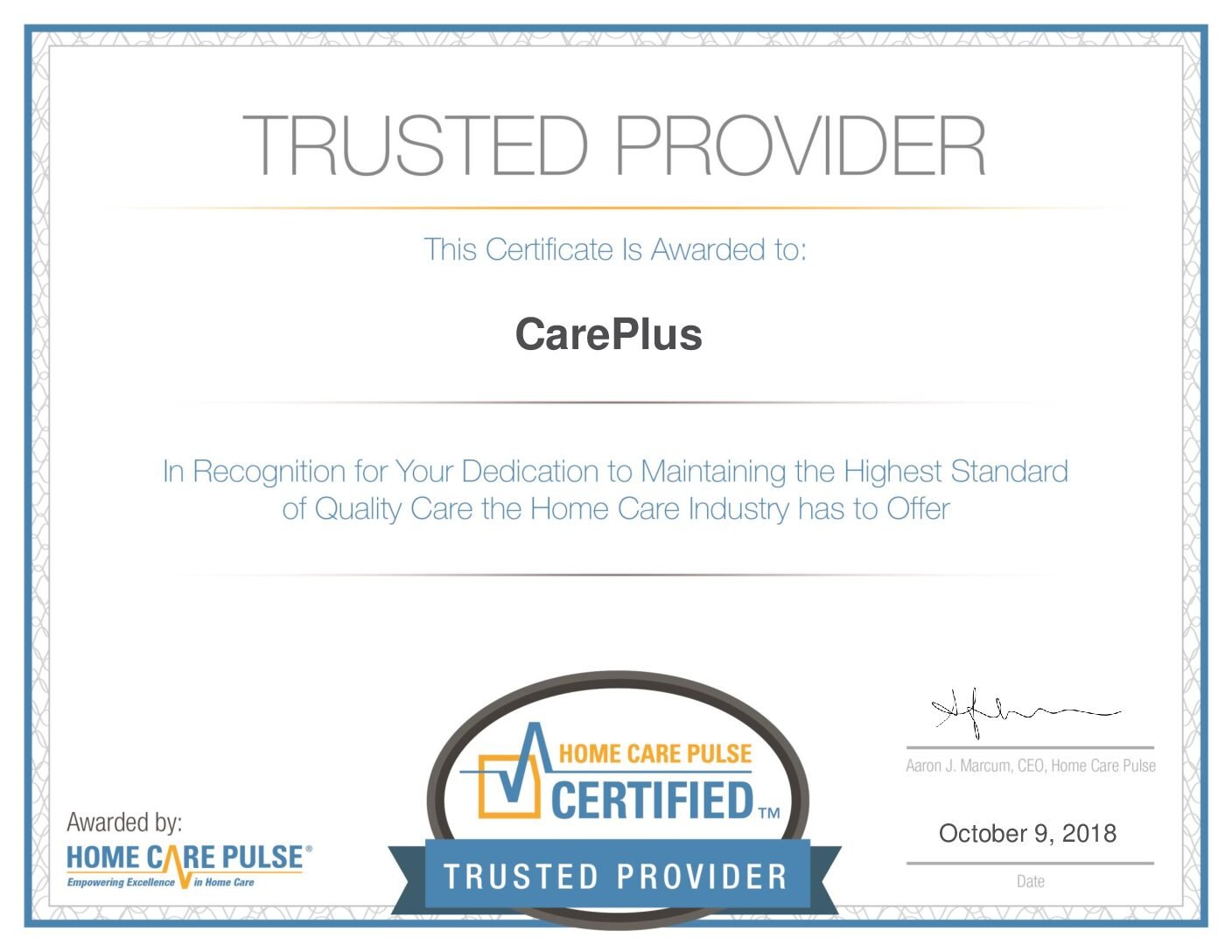
    We are proud to announce that Care Plus Home Health, Inc. is the recipient of the “Trusted Provider Award” from Home Care Pulse, in October 2018. This award is in recognition of our “dedication to maintaining the highest standard of quality care the home care industry has to offer.” We are proud to receive this prestigious award in the home health care industry.

    Care Plus, Inc. has an experienced and licensed home health care team that provides compassionate, efficient, patient-centered services. Please contact our professional support team for more information or a consultation. Our Gaithersburg, MD team can be reached at (301) 740-8870 or info@careplusinc.com.