Category: Health

  • 7 Keys to Growing Old in Your Own Home

    We at CarePlus Home Health love the “aging in place” philosophy. From the familiarity and comfort to the proven health and financial 7 Keys to Growing Old in Your Own Home graphicbenefits, it is indisputable the ideal choice for those who have the opportunity. According to a recent report by the AARP Public Policy Institute and the National Conference of State Legislatures almost 90% of people over 65 want to live in their home and community as long as possible. Here’s a great article with 7 Keys to Growing Old in Your Own Home. If you or your loved one would like to learn more or need help getting started, our caregivers are the absolute best in Maryland or Northern Virgina and we are here to help you.

    Aging in place requires planning ahead.

    Want to live in your home for the rest of your life? Boost your odds by “future-proofing” now. Older adults who are most likely to remain in their homes have successfully arranged their houses and lives in ways that maximize their ability to weather the physical and practical setbacks often associated with getting older — setbacks that can make living independently more challenging.

    Here are seven ingredients you’ll want to have in place in order to age in place:

    1. A single-story floor plan – Sure you can get up and down stairs easily now…”

    Continue Reading Tips – Basic safety upgrades, accessible utilities, transportation options, emergency alerts outsourced home maintenance & automated bill pay and other transactions >>

  • Better Sleep for Seniors

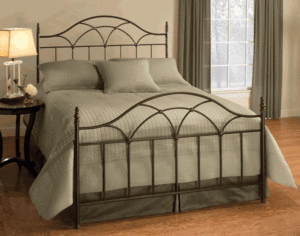
    5 Practical Tips to Help You Sleep BetterImage of a bed

    Is your loved one or someone close to you having trouble sleeping? Our Maryland in home care givers (service areas: Gaithersburg, Germantown, Rockville, Potomac, Silver Spring, Bethesda and beyond) understand how this can affect the lives of our loved ones and we hope this information will be of help to you.

    “As we age, the architecture of our sleep changes dramatically. The deep, delectable sleep in which we’re oblivious to the outside world and its sounds, called slow wave sleep, becomes shorter and more elusive. Our total sleep time also declines. Infants sleep an average of 11.6 hours per night, but by the time we hit 70, our nighttime sleep has shrunk by nearly half, to an average of 6.6 hours.” Continue reading>>

  • 10 Ways to Live Normally With a Leaky Bladder

    Did you know you can retrain your brain, your muscles, and your habits to control an overactive bladder? Bladder control is a big issue for10 Ways to Live Normally With a Leaky Bladder graphic aging adults, family members and caregivers.    It can be embarrassing for our loved ones and our in home caregivers of Maryland are well trained and understand this challenging problem. We hope you find this information helpful.

    “Nervous about going out because your bladder sometimes leaks? Or constantly worried about getting to a bathroom on time? About one in five adults over age 40 has problems with urinary urgency and frequency, according to the National Association for Continence. But an overactive bladder (OAB), also called urge incontinence or irritable bladder, doesn’t have to cramp your lifestyle.”  Continue reading>>

  • 7 Questions to Ask the Doctor About Preventing Falls

    Falling is more common among the elderly and we understand the impact it can be for the elderly and the family. We hope these tips will 7 Questions to Ask the Doctor About Preventing Falls graphichelp you and your loved ones in preventing falls.

    “Each year one in three adults age 65 years or older falls, according to the Centers for Disease Control and Prevention, and the possibility of serious injury from falling increases even more dramatically by the time your parents reach the age of 85.

     When accompanying your parents on a doctor visit, use the opportunity to find out if your parent is at risk for falling and what can be done to prevent a fall. The questions below should help. (Make sure to bring along all your parent’s prescriptions and over-the-counter medications.)”  Continue reading>>

  • 5 Hot-Weather Bummers for Alzheimer’s Caregivers

    This has been a record breaking week of high temperatures in our service areas of Maryland Our in home caregivers deal with these 5 Hot-Weather Bummers for Alzheimer’s Caregivers graphicchallenges on a daily basis.  We hope these tips help ease your work load and keep you and your loved ones cool and safe.

    Summer Alzheimer’s Worry #1: Body odor.

    Unpleasant to think about…but even more so to notice. People with Alzheimer’s not only neglect self care but if aggressive, they can resist the efforts of others to help them stay clean. If bathing has become an issue, hot weather tends to make it all the more contentious.

    Solutions: When someone you’re caring for fails the sniff test, above all resist making it a huge battle. Better to back off (and endure) a day or two, and then come at it again. For better cooperation, try suggesting sponge baths as a way to cool down (rather than as a necessity to keeping clean).” Continue reading>>

  • Help Seniors Beat the Dangers of Summer Heat

    Sweltering humidity and temperatures over 90 degrees are dominating our Maryland in home care service areas (Gaithersburg, Help Seniors Beat the Dangers of Summer Heat graphicGermantown, Rockville, Potomac, Silver Spring, Bethesda and beyond) this week. As such, we thought it would be helpful to post some heat beating tips for seniors. If you need in home care, part time assistance or simply some advice call CarePlus Home Health in Gaithersburg, Maryland at (301) 740-8870. We have over 18 years of experience and we are here to help!

    Help Seniors Beat the Dangers of Summer Heat

    “Summer’s here. And with it come health risks for seniors. Older people are especially vulnerable to heat illnesses, as elaborated on by the Centers for Disease Control. The two biggest risks are heat stroke (extremely serious) and heat exhaustion (milder than heat stroke but still serious). Dehydration and heat cramps are in there, too.

    There are several things you can do to help protect your parents from the dangers of baking-high temps.

    Make sure they:

    • Are drinking plenty of hydrating fluids, like water, and avoiding dehydrating fluids, like alcohol and caffeinated beverages
    • Limit time in the direct sun and wear hats, sunglasses, and sunscreen…” Continue Reading >>
  • Cancer Survivors: 8 Lessons We Wish We’d Known

    In honor of National Cancer Survivors Day coming up on the first Sunday in June, we are sharing this fantastic insight straight from cancerNational Cancer Survivor's Day logosurvivors themselves. Our home caregivers are honored to get to be an integral part of cancer care teams throughout our Maryland home care service areas, and we love to share any little bits of insight that might make this trying time a little bit better.

    “A few years back, New York Times reporter Dana Jennings posted a very moving blog titled Ten Lessons of Prostate Cancer.

    It touched a nerve for me — and many of us in Cancer World — because we all have a desperate desire to connect with others living with cancer in their lives and discover the tidbits of knowledge that only experience can teach. At Caring.com, we have a series of articles titled What I Wish I’d Known, in which well-known people share the lessons they learned in caring for loved ones. Below, in my own personal order of importance, are a few of Dana Jennings’ ten lessons, augmented with others from the more than 260 people who commented on his blog, and still more from community members at Caring.com who’ve taken the time to share their wisdom in group postings and answers to others’ questions.” Continue Reading >>

  • Holidays and Dementia — How to Make it Work?

    Dementia is a difficult disease to handle at the best of times–but mix in the constant sensory stimulation of the holidays with an influx of family members, and you could have a recipe for disaster! Dementia patients are often easily distressed, and depending on the variation they suffer from, they could even become aggressive or violent. Luckily, a little advance planning and some honest, open discussion among family members can keep your holiday memories from becoming cringe-worthy.

    Remember to tailor your response to your loved one’s dementia based on their specific symptoms and how advanced the disease is; not all of the tips below will apply to everyone!

    Dealing with Dementia

    A senior citizen with Alzheimer’s disease or dementia has very different needs than many other family members; try to keep them comfortable. Remember to keep a favorite sweater or a warm blanket handy in case they get cold; as we all know, the elderly often feel the winter nip in the air more keenly than those who are younger!

    Many times, a loved one with early or moderate-stage dementia may feel the need to help with holiday preparations; after all, they’ve been doing it their entire lives! Rejecting their offers of help, even out of the best of intentions, can foster wounded feelings. Instead, ask them to help with simple, repetitive tasks, like stringing popcorn and berries for garlands, or signing cards from the whole family. Not only will it cut down on your own load, but repetitive tasks can be soothing for those suffering from dementia.

    Remember that disruptions of routine can be upsetting to dementia patients; try your best to keep their regular schedule! If you have morning or evening routines with your loved ones, don’t let the holidays preempt them; starting and ending the day on the right note can lead to a reduction of stress for everyone involved.

    If traveling is difficult with your elderly loved one, don’t be afraid to ask family and friends to come to you. The holidays are a time to be with the people you care about–and right now, one of those people has some very special requirements. There’s nothing wrong with adjusting family traditions to better facilitate your parents’ or grandparents’ enjoyment of them! Start some new traditions!

    On the other hand, there’s a common saying among memory loss experts that goes, “last in, first out; first in, last out.” What this means is that long-standing memories–memories from decades ago–can be the memories that remain longest. Try to keep long-standing traditions; it can help your loved one remain oriented to their present time and season, and help them to better enjoy the holidays without becoming totally confused.

    Preparing Family for the Differences

    Before they arrive for the holidays, have a detailed, honest, and open discussion with your family members about your elderly loved one’s condition. If siblings, cousins, or nieces and nephews haven’t seen Grandma and Grandpa in a while, it’s best to prepare them, and let them know about any memory loss. Be sure to emphasize that memory loss is not a personal insult. Many times, people can become hurt when their grandparents or parents don’t recognize them, or mistake them for another family member or friend; remind them that this doesn’t mean they aren’t loved, just that your loved one is sick.

    Let them know how to gently remind your loved one who they’re with and where they are, without getting upset; although dementia patients can be intellectually confused, they can pick up on emotional cues from those around them. If the people in their vicinity are upset or emotional, chances are your loved one will be too.

    Explaining dementia or Alzheimer’s disease to children can be difficult and heartbreaking, but it can be for the best. Try to explain to any children present why they need to watch their behavior, even though they’re around family, and be sure to emphasize the first point–that if Grandpa and Grandma don’t recognize them, it’s just because they’ve changed so much!

    Celebrating the holidays with a family member suffering from dementia or Alzheimer’s disease can be difficult, but keeping your eyes open and your expectations realistic can help to curtail any hurt feelings or family disasters. Remember–your loved one hasn’t morphed into a disease. The parent, spouse, grandparent, or sibling you love is still there; they just need a little extra TLC!

    From all of us here at CarePlus, we wish you and your family members the best of holidays, and a happy, hopeful start to the new year.

  • 10 Healthy Holiday Substitutions

    With Thanksgiving on its way, the holiday season of 2011-2012 is just about ready to kick off–and with that comes lots of delicious (and usually not terribly healthy) holiday food!

    It may not be easy, but it’s a good idea to try not to overindulge during the holiday season–and there’s no shortage of tips on how you can succeed at that. One of the best ways? Make substitutions while cooking! We’ve listed some of our favorite substitutions, many of which we’d never even thought of before.

    1. Applesauce for oil or butter. Switching out the fatty oils for applesauce isn’t a new idea, but it’s one a lot of people might not be willing to try. The texture’s just right, though, and thanks to the natural sugars in fruit, even unsweetened applesauce can lend some sweetness to your baking!
    2. Graham crackers for cookies in pie crusts! Pies are one of the holiday standards, and while everyone loves a good Oreo or cookie crust, swapping that out for reduced-fat graham crackers can cut out up to half the calories while still tasting great!
    3. Stevia for sugar. This natural sweetener, which has recently been gaining in popularity is now more readily available, is lower in calories than sugar and up to 300 times sweeter. You read that right–300 times. Popular brand names are Sweetleaf and Truvia.
    4. Prosciutto for bacon. While bacon is an American standard year-round, it’s also well-known to be a major (if majorly delicious) health hazard. Prosciutto can lend a similar taste while having half the calories and two-thirds as much fat!
    5. Nuts for croutons. Serving up salad as a healthy option with your holiday meals? Croutons add a desirable crunch, but they can also pack quite a lot of fat and sodium. Instead, try lightly toasted almonds, pecans, or walnuts! Not only will you be eliminating those extra carbs, but nuts sneak in some extra omega-3 fatty oils.
    6. Pureed fruit for syrup. Looking to warm up on cold mornings with some waffles or pancakes? Instead of slathering them with syrup, try pureeing fruit with a bit of honey; it packs in a lot less sugar, and when it’s warmed on the stove beforehand, tastes even better.
    7. Frozen bananas for ice cream. You read that right! Freeze a couple of bananas overnight, then puree them in the blender; drizzle in a little bit of honey and some cinnamon. The texture’s almost identical, and the taste is to die for!
    8. Ground turkey for ground beef. Since turkey is a leaner meat, it makes a great (and seasonal!) substitution for ground beef. A few spoonfuls of chicken stock can keep it from drying out!
    9. Dry beans for canned beans. Sure, canned beans may be more convenient, but they’re so high in sodium and preservatives! Stock up on some dry beans; all it takes is a little extra soaking and boiling.
    10. Marshmallow Fluff for the butter and sugar in frosting. Believe it or not, this childhood favorite is actually healthier than most frosting; 2 tablespoons is not only fat-free, it only has 40 calories and 6 grams of sugar, while conventional frosting can pack in up to 100 calories and 14 grams of sugar (not to mention all that fat)!

    Of course, indulging in some of the ‘bad’ stuff around the holidays isn’t a mortal sin–feel free to treat yourself, but remember that, like with all things, moderation is key!

    Do you have any favorite substitutions? Let us know!

  • Quick Stress Relief Tips for Family and Caregivers

    Dealing with a loved one who’s ill or incapacitated is stressful; we all know this. Unfortunately, though, the psychological needs of caregivers, family members and friends often get lost in the shuffle of arranging for care, scheduling doctor’s visits, and dealing with health crises.

    Some caregivers, especially family and friends, feel selfish thinking about their own mental wellbeing while their wife, brother, son or mother is in such dire shape, but the fact of the matter is—whether you’re a primary caregiver part of the time or simply assist while a full-time nursing aide cares for your loved one, if you’re not in good psychological shape, your ability to help is critically diminished.

    Now, this isn’t to say that you should rearrange doctor’s appointments so that you can take a spa day, but an ongoing effort to attend to your mental health—think of it as maintenance work, like you’d do for your car or a garden—can not only benefit you, but also the loved one you’re caring for.

    The question is—how do you do it?

    Relax in Minutes

    Sometimes, as a caregiver, you may feel like you don’t have the time to spare to help yourself relax; we understand. Caregiving is a full-time job, whether or not you have a nursing aide helping you. Here are a few techniques you can use when you’re stressed but only have a couple of minutes to yourself.

    1. Deep breathing. This isn’t quite as simple as it sounds. Often we breathe from our chest, rather than our abdomen, which means we’re actually getting less oxygen than we should. To ensure that you’re breathing from your abdomen, lay a hand on your chest and another on your stomach. When you breathe deeply, your stomach should expand—moving the hand there drastically—while the hand on your chest only moves a little bit.
    2. Visualization. There’s more to visualization than simply remembering a pretty vista you saw once. In order to get the full benefit of visualization’s stress relief, focus on each sense in turn. For example, if your chosen visualization is a tropical beach, you should not only try to see the palm trees in the sun, you should feel the sand beneath your toes, smell the salt water on the sea breeze, hear the crashing waves and the sounds of sea birds, and taste that piña colada!
    3. Stretching. Yoga is a great relaxation technique, but if you’re short on time it might not be the best option. So instead of doing a full series of poses, you can, instead, focus on just a few simple stretches. A good move for stretching your spine is the cat-cow, in which you get down on your hands and knees, and then slowly and rhythmically arch your back (like a startled cat) and then inverse it, letting your stomach arch toward the floor (like a cow’s belly). Any kind of stretching can refresh you and help reinvigorate you, though, and the best part is it requires no equipment—only a few minutes and a little bit of space!
    4. Treat yourself. While self-medicating for stress is never a good thing, treating yourself to something you like every once in a while can have a positive effect on your overall mental health. Love chocolate? Keep a stash of Hershey’s kisses somewhere and, when you’ve had a rough day, allow yourself a few. There are other ways to treat yourself, too—YouTube your favorite scene from your favorite movie, listen to an embarrassingly bad band you happen to love, or take a bubble bath instead of a shower! A little treat can do wonders.
    5. Scalp massage. Massage of any kind feels great, but scalp massage is easy and has multiple benefits—it boosts blood flow, relieves stress, and can reduce headaches and migraines (which is especially useful if you’re prone to tension headaches, often brought on by stress). Place your thumbs in the hollow behind each ear and spread your fingertips over your head, as far as is comfortable; massage in circles for a minute or two for instant relief.