Category: Care for Seniors

  • May is National Stroke Awareness Month

    May is National Stroke Awareness Month

    According to the National Institutes of Health, “Each year in the United States, there are more than 800,000 strokes.”

    Strokes are the fifth leading cause of death in the United States, according the Centers for Disease Control. More than any other disease a stroke can cause serious, long-term disabilities. The American Heart Association Stroke Council (ASC) says that stroke victims are vulnerable to repeat strokes.

    CarePlus Home Health would like to offer you a few tips on how to recognize stoke-like symptoms and the necessary steps to take to reduce the risk of having a stroke.

    What is a Stroke?

    When a major blood vessel in the brain is either blocked by a clot or bursts, a portion of the brain cannot get the blood it needs, causing brain cells to die.

    This is a stroke.

    What Causes a Stroke?  

    The two-most common types of strokes are hemorrhagic and ischemic.

    • A hemorrhagic stroke occurs when a weakened blood vessel in the brain ruptures. High blood pressure is the most common cause of a hemorrhagic stroke.
    • An Ischemic stroke occurs when a blood vessel supplying blood to the brain is obstructed. According to the ASC, ischemic strokes account for 87% of all strokes.

    When a person has a stroke, depending on where in the brain the stroke occurs, the part of the body controlled by that part of the brain cannot function. Short of death, strokes can cause paralysis, loss of vision, memory loss as well as other possible outcomes – some of which are irreversible.

    Remember to ACT FAST!

    Medical intervention is needed as quickly as possible when experiencing stroke symptoms.

    According to the Mayo Clinic, an ischemic stroke requires specific pharmaceuticals to break up the clot in the brain; medication should be administered “within 4.5 hours from when symptoms first started if given intravenously.

    The sooner a stroke patient is treated with medication, the better. Quick medical treatment may not only improve a stroke victim’s chances of survival, additional medical complications may be avoided.

    According to the Centers for Disease Control, the acronym F-A-S-T can help you remember stroke symptoms. 

    F = Face drooping: Ask the person to smile. Does one side droop?

    A = Arm weakness: Ask the person to raise both arms. Does one arm drift downward?

    S = Speech difficulty: Ask the person to repeat a simple sentence. Are their words slurred?

    T = Time to call 9-1-1: If the person shows any of these signs, call 9-1-1 immediately. Stroke treatment can begin in the ambulance.

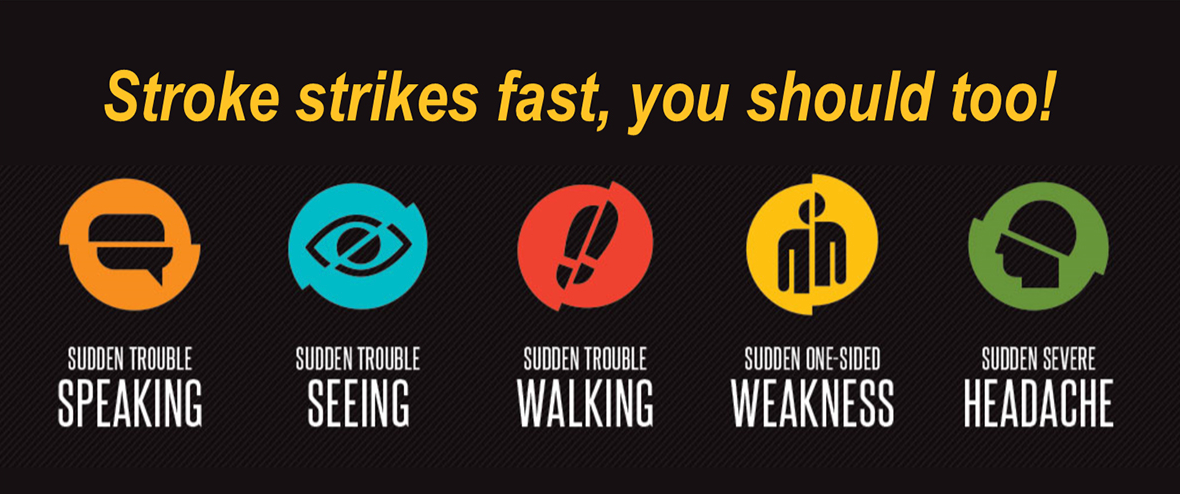
    Additional stroke symptoms include dizziness; loss of balance or coordination; trouble walking; problems seeing out of one or both eyes; severe headache; numbness of the face; and sudden confusion or trouble understanding others.

    Keeping in mind the FAST signs (see above), it is imperative to contact emergency services as soon as possible if you or someone else displays any stroke symptoms.

    Do NOT Let COVID-19 Prevent You From Seeking Treatment

    Millions of Americans are rightfully following the CDC’s social distancing guidelines with respect to COVID-19; however, these social distancing measures should not prevent you from getting emergency medical attention should you experience stroke-like symptoms.  

    Call 911!

    Emergency medical technicians (EMTs) are trained to assess your condition and take immediate steps to hospitalize someone having a stroke. The risks associated with not obtaining treatment for a stroke far outweigh the potential exposure to COVID-19, particularly when healthcare professionals involved – from the EMT to the treating doctors and nurses – are made aware of any underlying health concerns (e.g., a compromised immune system).

    Take Care of Yourself!

    The CDC offers the following stroke prevention guidelines:

    • Eat a healthy, low-sodium diet; include plenty of fruits and vegetables;
    • Maintain a healthy weight;
    • Be physically active.
    • Do not smoke;
    • Avoid secondhand smoke;
    • Limit your alcohol use;
    • Prevent or manage your other health conditions, especially high blood pressure, high cholesterol, diabetes, and obesity.

    Some contributing strokes factors – age, race and gender, for example – are outside of your control. Living a healthy lifestyle, however, can help prevent you or your loved one from having a stroke.



  • Caregiving & Staying Connected: During COVID-19

    Caregiving & Staying Connected: During COVID-19

    There are many resources in our community during COVID-19. Our list is comprised of the “Care” industry, testing sites and updates, supporting our local small businesses and staying connected to loved ones.

    In-Home Care

    CarePlus Home Health, Inc. is open and available to support you for care, medication reminders, doctors’ appointments, cooking meals, laundry and housekeeping. If you need anything, we are here to help. We will be following the CDC guidelines and taking precautions to keep both our families and caregivers safe. For additional information visit our COVID-19 Resource Page.

    Local COVID-19 Resources

    Local Testing Sites in Montgomery County, Maryland

    You still need an appointment and provider order to get a test at a VEIP location. Here is what is recommended.

    Location: White Oak VEIP (Montgomery County) 2121 Industrial Parkway Silver Spring, MD

    Needed:

    1. Call your health care provider or the local health department if you do not have a provider. If you qualify for a test, your provider will order a test online through CRISP, the regional HIE, which serves Maryland and the District of Columbia.
    2. Once your provider submits your order, you will receive an email with your Order Confirmation Code and a link to the self-scheduling site. The number of appointment slots at each location is dependent on the number of supplies available.

    Other testing sites are listed below.

    Kaiser Permanente has testing sites for its members in Gaithersburg.

    Adventist HealthCare Shady Grove Medical Center has coronavirus testing only for critically ill patients who are likely to need hospitalization. 

    Some MedStar Health Centers, with multiple locations in the region, are testing for the virus. Patients are asked to call the clinic or hospital first. 

    Holy Cross Hospitals, in Silver Spring and Germantown, have tents to triage patients with influenza-like illnesses, including the novel coronavirus. 

    Please note, this information is constantly changing so here are links to check for updates.

    Maryland Department of Health Testing Information

    Maryland Department of Health: Frequently Asked Questions: Maryland Vehicle Emissions Inspection Program (VEIP) COVID-19 Testing Sites Updated April 23, 2020

    National Resources

    CDC

    NIH

    AARP

    Online Groceries, Food & Household Needs

    Here are a few companies to get you started but there may be delays so give yourself some time in advance. As always, we are here if you need us.

    Instacart: offers groceries from many chain stores and markets

    Whole Foods: offers delivery and pick-up

    Peapod: offers delivery and pick-up from Giant

    Shipt: offers delivery and pick up from a variety of stores groceries and household needs

    There are local delivery services that deliver food from restaurants: Grub Hub, UberEats and others local restaurants that are doing their own deliveries.

    Need Assistance with Food

    The Montgomery County Food Council has important information on available food assistance resources, as well as opportunities for individuals and organizations to support community needs. 

    Many organizations, including Manna Food Center, the Capital Area Food Bank and  Meals on Wheels also have information about food assistance programs.  

    Staying Connected

    There are ways to stay connected with friends and family during these uncertain times.If you have an iPhone or iPad you can use FaceTime.

    Here are some tips:

    Make sure FaceTime is set up properly

    Dial the person you want to call (or use contact menu) and push the video FaceTime button below. Remember, the other person needs to have an “apple product” or it will not work.

    You find FaceTime on the main menu, middle button on the 2nd row.

     Here is a link to Apple Support if needed.

    Other technology options to connect for video conferencing are: 

    Skype

    Zoom

    Google Hangouts

    WhatsApp

    Try a few and see what works easiest for you. If you need help there is some support online, Generations on Line has a free app Easy Tablet Help for Seniors that may be helpful.

    CarePlus Home Health, Inc is here to help. If you have trouble getting groceries, medication delivered or any other needs, call us at 301-740-8870.