Tag: stroke care

  • Stroke Awareness, Stay Safe.

    Stroke Awareness, Stay Safe.

    According to the National Institutes of Health, “Each year in the United States, there are more than 800,000 strokes.”

    Strokes are the fifth leading cause of death in the United States, according the Centers for Disease Control. More than any other disease a stroke can cause serious, long-term disabilities. The American Heart Association Stroke Council (ASC) says that stroke victims are vulnerable to repeat strokes.

    CarePlus Home Health would like to offer you a few tips on how to recognize stroke-like symptoms and the necessary steps to take to reduce the risk of having a stroke.

    What is a Stroke?

    When a major blood vessel in the brain is either blocked by a clot or bursts, a portion of the brain cannot get the blood it needs, causing brain cells to die.

    This is a stroke.

    What Causes a Stroke?  

    The two-most common types of strokes are hemorrhagic and ischemic.

    • A hemorrhagic stroke occurs when a weakened blood vessel in the brain ruptures. High blood pressure is the most common cause of a hemorrhagic stroke.
    • An Ischemic stroke occurs when a blood vessel supplying blood to the brain is obstructed. According to the ASC, ischemic strokes account for 87% of all strokes.

    When a person has a stroke, depending on where in the brain the stroke occurs, the part of the body controlled by that part of the brain cannot function. Short of death, strokes can cause paralysis, loss of vision, memory loss as well as other possible outcomes – some of which are irreversible.

    Remember to ACT FAST!

    Medical intervention is needed as quickly as possible when experiencing stroke symptoms.

    According to the Mayo Clinic, an ischemic stroke requires specific pharmaceuticals to break up the clot in the brain; medication should be administered “within 4.5 hours from when symptoms first started if given intravenously.

    The sooner a stroke patient is treated with medication, the better. Quick medical treatment may not only improve a stroke victim’s chances of survival, additional medical complication may be avoided.

    According to the Centers for Disease Control, the acronym F-A-S-T can help you remember stroke symptoms.

    F = Face drooping: Ask the person to smile. Does one side droop?

    A = Arm weakness: Ask the person to raise both arms. Does one arm drift downward?

    S = Speech difficulty: Ask the person to repeat a simple sentence. Are their words slurred?

    T = Time to call 9-1-1: If the person shows any of these signs, call 9-1-1 immediately. Stroke treatment can begin in the ambulance.

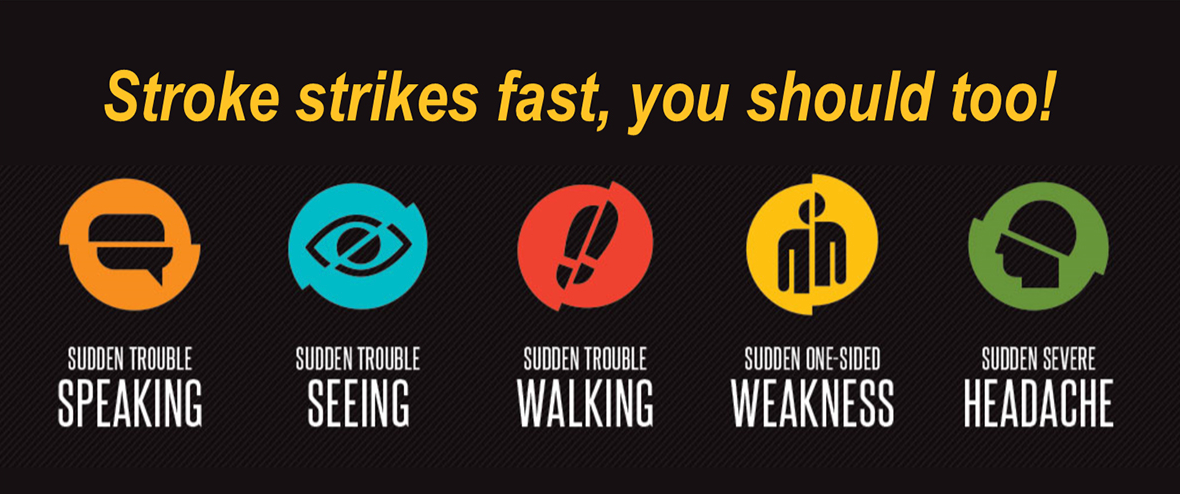
    Additional stroke symptoms include dizziness; loss of balance or coordination; trouble walking; problems seeing out of one or both eyes; severe headache; numbness of the face; and sudden confusion or trouble understanding others.

    Keeping in mind the FAST signs (see above), it is imperative contact emergency services as soon as possible if you or someone else displays any stroke symptoms.

    Do NOT Let COVID-19 Prevent You From Seeking Treatment

    Millions of Americans are rightfully following the CDC’s social distancing guidelines with respect to COVID-19; however, these social distancing measures should not prevent you from getting emergency medical attention should you experience stroke-like symptoms.  

    Call 911!

    Emergency medical technicians (EMTs) are trained to assess your condition and take immediate steps to hospitalize someone having a stroke. The risks associated with not obtaining treatment for a stroke far outweigh the potential exposure to COVID-19, particularly when healthcare professionals involved – from the EMT to the treating doctors and nurses – are made aware of any underlying health concerns (e.g., a compromised immune system).

    Take Care of Yourself!

    The CDC offers the following stroke prevention guidelines:

    • Eat a healthy, low-sodium diet; include plenty of fruits and vegetables;
    • Maintain a healthy weight;
    • Be physically active.
    • Do not smoke;
    • Avoid secondhand smoke;
    • Limit your alcohol use;
    • Prevent or manage your other health conditions, especially high blood pressure, high cholesterol, diabetes, and obesity.

    Some contributing strokes factors – age, race and gender, for example – are outside of your control. Living a healthy lifestyle, however, can help prevent you or your loved one from having a stroke.


  • May is National Stroke Awareness Month

    May is National Stroke Awareness Month

    According to the National Institutes of Health, “Each year in the United States, there are more than 800,000 strokes.”

    Strokes are the fifth leading cause of death in the United States, according the Centers for Disease Control. More than any other disease a stroke can cause serious, long-term disabilities. The American Heart Association Stroke Council (ASC) says that stroke victims are vulnerable to repeat strokes.

    CarePlus Home Health would like to offer you a few tips on how to recognize stoke-like symptoms and the necessary steps to take to reduce the risk of having a stroke.

    What is a Stroke?

    When a major blood vessel in the brain is either blocked by a clot or bursts, a portion of the brain cannot get the blood it needs, causing brain cells to die.

    This is a stroke.

    What Causes a Stroke?  

    The two-most common types of strokes are hemorrhagic and ischemic.

    • A hemorrhagic stroke occurs when a weakened blood vessel in the brain ruptures. High blood pressure is the most common cause of a hemorrhagic stroke.
    • An Ischemic stroke occurs when a blood vessel supplying blood to the brain is obstructed. According to the ASC, ischemic strokes account for 87% of all strokes.

    When a person has a stroke, depending on where in the brain the stroke occurs, the part of the body controlled by that part of the brain cannot function. Short of death, strokes can cause paralysis, loss of vision, memory loss as well as other possible outcomes – some of which are irreversible.

    Remember to ACT FAST!

    Medical intervention is needed as quickly as possible when experiencing stroke symptoms.

    According to the Mayo Clinic, an ischemic stroke requires specific pharmaceuticals to break up the clot in the brain; medication should be administered “within 4.5 hours from when symptoms first started if given intravenously.

    The sooner a stroke patient is treated with medication, the better. Quick medical treatment may not only improve a stroke victim’s chances of survival, additional medical complications may be avoided.

    According to the Centers for Disease Control, the acronym F-A-S-T can help you remember stroke symptoms. 

    F = Face drooping: Ask the person to smile. Does one side droop?

    A = Arm weakness: Ask the person to raise both arms. Does one arm drift downward?

    S = Speech difficulty: Ask the person to repeat a simple sentence. Are their words slurred?

    T = Time to call 9-1-1: If the person shows any of these signs, call 9-1-1 immediately. Stroke treatment can begin in the ambulance.

    Additional stroke symptoms include dizziness; loss of balance or coordination; trouble walking; problems seeing out of one or both eyes; severe headache; numbness of the face; and sudden confusion or trouble understanding others.

    Keeping in mind the FAST signs (see above), it is imperative to contact emergency services as soon as possible if you or someone else displays any stroke symptoms.

    Do NOT Let COVID-19 Prevent You From Seeking Treatment

    Millions of Americans are rightfully following the CDC’s social distancing guidelines with respect to COVID-19; however, these social distancing measures should not prevent you from getting emergency medical attention should you experience stroke-like symptoms.  

    Call 911!

    Emergency medical technicians (EMTs) are trained to assess your condition and take immediate steps to hospitalize someone having a stroke. The risks associated with not obtaining treatment for a stroke far outweigh the potential exposure to COVID-19, particularly when healthcare professionals involved – from the EMT to the treating doctors and nurses – are made aware of any underlying health concerns (e.g., a compromised immune system).

    Take Care of Yourself!

    The CDC offers the following stroke prevention guidelines:

    • Eat a healthy, low-sodium diet; include plenty of fruits and vegetables;
    • Maintain a healthy weight;
    • Be physically active.
    • Do not smoke;
    • Avoid secondhand smoke;
    • Limit your alcohol use;
    • Prevent or manage your other health conditions, especially high blood pressure, high cholesterol, diabetes, and obesity.

    Some contributing strokes factors – age, race and gender, for example – are outside of your control. Living a healthy lifestyle, however, can help prevent you or your loved one from having a stroke.


  • Stroke Care Is Essential to Full Recovery

    Stroke Care Is Essential to Full Recovery

    The effects of a stroke are usually visible and often very dramatic. It can be difficult for the person who had the stroke to face the long effort of recovery. But just as friends and family need to act quickly when they think an older loved one is having a stroke, everyone needs to keep working after the person has come out of the hospital. The good news is that at some point after hospital treatment, it may be possible for a person who has had a stroke to continue rehabilitation and receive stroke care at home.

    There are several distinct signs that an older loved one is having a stroke. Always be alert to stroke if your older loved one experiences any of these symptoms quite suddenly: sudden loss of balance, sudden severe headache without a known cause, sudden trouble seeing from one or both eyes, slurred or difficult-to-understand speech, numbness, weakness, or drooping in the face, arm, or leg, especially on one side of the body, or sudden confusion.

    In the hospital, the person’s doctor will determine whether the symptoms have actually been caused by a stroke or by some other condition such as a brain tumor or a drug reaction, what kind of stroke it was, and what emergency treatments will be most effective. The Mayo Clinic describes a wide array of these emergency procedures very clearly on their stroke diagnosis and treatment page.

    What Happens After a Stroke

    A stroke affects movement and sensation on the opposite side of the body from the side of the brain that was affected. If the right side of the brain was affected, the left side of the body may show it; if the left side of the brain, the right side of the body. In addition, damage on the left side of the brain may cause difficulty with speech or language.

    A stroke survivor will probably experience fatigue, weakness on one side of the body, pain, and sleep disruption. Foot drop, difficulty picking up the front of the foot, is also common. A stroke can also cause problems with balance, vision, swallowing, spastic movements and continence.

    A person who has had a stroke may experience fear, anxiety, frustration, anger, sadness and a sense of loss. These are natural emotional responses to stroke. It can take time to adjust to all that has happened. Other emotional and personality changes can occur because of the physical effects of brain damage caused by the stroke.

    A stroke may also cause cognitive changes. Easy, familiar tasks may become difficult. The person may develop memory problems or have difficulty communicating.

    Stroke Care Promotes Rehabilitation

    With so many potential changes to contend with, a stroke survivor can expect to undergo a rigorous rehabilitation program. It may begin before the person leaves the hospital and continue in a rehabilitation unit of the same hospital, another rehabilitation unit or skilled nursing facility, an outpatient unit, or at home with the support of professional caregivers. (CarePlus provides a 72-hour post-discharge program to help stroke survivors and others transition from a hospitalization.) The goal is to help the person rebuild as much of their life and independence as possible.

    However rigorous, a rehabilitation program will take into account the person’s age, overall health, lifestyle, personal priorities, the extent of the disability caused by the stroke, and the availability of loved ones and professional caregivers to help carry out the program.

    Depending on the effects, a stroke treatment team may include a neurologist, a doctor trained in brain conditions, a rehabilitation doctor, a nurse, a dietitian, a physical therapist, an occupational therapist, a recreational therapist, a speech pathologist, a social worker, a case manager to coordinate all of the caregivers. It may also include a psychologist or psychiatrist to help with emotional difficulties and personality changes.

    Stroke Care Continues at Home

    A stroke survivor and their loved ones will need to evaluate the person’s way of living to ensure physical safety and progress. Some common changes are eating calcium-rich foods and taking calcium supplements to increase bone strength, wearing flat, wide-toed shoes, walking around the house using assistive devices prescribed by a physical therapist instead of using the furniture, recognizing that certain medicines cause drowsiness and taking precautions, and not walking at all when the person feels distracted. These changes all require family and professional support.

    The house may need some rearrangement like clearing paths to the kitchen, bedroom and bathroom and removing loose carpets and runners in hallways and stairwells or fastening them with nonskid tape to improve traction. It may be necessary to install assistive devices like a raised toilet seat, a bench in the tub or shower, a hand-held showerhead, and plastic strips that adhere to the floor of a tub or shower and to buy things like long-handled brushes and washing mitts with pockets for soap and electric toothbrushes and razors.

    During and after physical therapy, a person who has had a stroke will need to continue with exercise that strengthens leg muscles and restores balance; it may be helpful to have a physical therapist come to the house. An occupational therapist can help the person organize their daily activities and inspect the home before hospital discharge to help arrange it to the loved one’s new needs.

    A home caregiver can assist with all of these changes, do things for the stroke survivor that they can’t yet do themselves, help the survivor relearn may activities, and support them in the disciplines that aid recovery, like diet and exercise. Home caregivers can prepare nutritious meals consistent with a doctor’s advice and even help the person eat while they need help, transfer the person from bed to a wheelchair, chair, or bathroom, help them bathe and dress, remind them about medication times and personal safety habits, assist with prescribed motion and strength exercises, monitor for signs of another stroke, provide transportation to medical appointments, do light housekeeping and run errands, help plan and carry out social activities, and just as importantly, offer companionship and emotional support when friends and family can’t be there. (See more about the stroke care services CarePlus Home Health offers here.)

    To learn more about home stroke care services available in Montgomery County, MD from CarePlus, call us at 301-740-8870 or use our contact form. We’d be glad to talk with you about your loved one’s situation and develop an individualized plan together.

  • Cholesterol: The Good, the Bad, and the Confusing

    First of all—what exactly is cholesterol, and why are there different kinds?  Are doctors purposely trying to confuse us?

    There may in fact be a secret consortium of conspiring physicians out there, but here’s what we know: cholesterol is a waxy substance that is both produced by our bodies and found in our food. We need some cholesterol—good cholesterols—because they help allow our cells to absorb fluids and assist in manufacturing hormones and even Vitamin D. So, as you can guess, having cholesterol in your body isn’t necessarily a bad thing—but having too much of a specific kind can be.

    So what exactly are these different kinds?

    Living in today’s world and inundated by news (often conflicting) about health, I’m sure you’re familiar with the terms ‘good cholesterol’ and ‘bad cholesterol.’ Because cholesterols, like other fats, can’t dissolve in the blood, they have to be carried around by special substances called lipoproteins.

    The Good

    Good cholesterol is an easier-to-remember epithet for cholesterol carried by HDL, or high-density lipoprotein. Why is HDL cholesterol good? It seems like even the experts are confused on this subject, but there are two theories. One is that HDL carries cholesterol away from the arteries and to the liver, where it can be passed from the body. Some experts also think that HDL might be dragging cholesterol away from plaque, and in doing so, slowing its build up in arteries.

    So, HDL cholesterol is good. We want more of it. In fact, the higher your HDL, the less likely you are to have a heart attack or stroke. How do you raise your HDL levels? Quitting smoking, losing excess weight and being more active all help increase HDL levels, and there are some medications out there that can help, too.

    And that brings us to…

    The Bad

    Bad cholesterol is any cholesterol that’s carried by low-density lipoprotein, or LDL. LDL cholesterol tends to build up along the inner walls of arteries, and when combined with other substances in the blood make a hard, thick substance called plaque that can narrow the arteries and make them less flexible. The biggest danger to this buildup, though, is the possibility of a clot forming and getting stuck in the plaque—blocking the flow of blood and cutting oxygen off from vital organs. That’s right, this is often the stuff to blame for heart attacks and strokes.

    There are ways to keep your bad cholesterol (LDL) levels low, though. Diet and exercise are the most commonsense ways, but if they’re just not cutting it, your doctor also has medications to lower your bad cholesterol.

    Still Confused?

    Don’t worry. Your doctor or a stroke care professional can explain all of this—and give you your blood cholesterol numbers by performing a simple blood test. Just remember: keep your high-density lipoprotein count (HDL cholesterol) high, and your low-density lipoprotein (LDL cholesterol) low, and just like your doctor, your mom, and your own common sense have been exhorting you your whole life—eat your veggies and take the stairs!