Category: Nutrition

  • Getting Nutrition Right for Aging Adults 

    Getting Nutrition Right for Aging Adults 

    While good nutrition matters in all phases of life, as people age, they experience increased physical  vulnerabilities, and the proper diet helps safeguard and minimize complications that can be a part of the aging process. It’s not always easy to manage good nutrition, but the benefits can be significant.

    The Basics of Good Nutrition for Aging Adults

    Nutrition concerns the consumption of food and drink that provide the body energy and protection from poor health. The goal of good nutrition is to have the proper diet as well as a lifestyle that encourages  the absorption of nutrients. The NIH (National Institutes of Health) lists some key nutrition considerations for older adults, which include:

    • Eating foods high in nutrients
    • Avoid empty calories like junk food, soda, and alcohol.
    • Pick foods that are low in cholesterol and fat.
    • Drink plenty of hydrating liquids
    • Be physically active.

    The U.S. Department of Health and Human Services also recommends emphasizing lean proteins and  vitamins B12 and D as important parts of a good diet.

    Challenges in Getting the Proper Nutrition

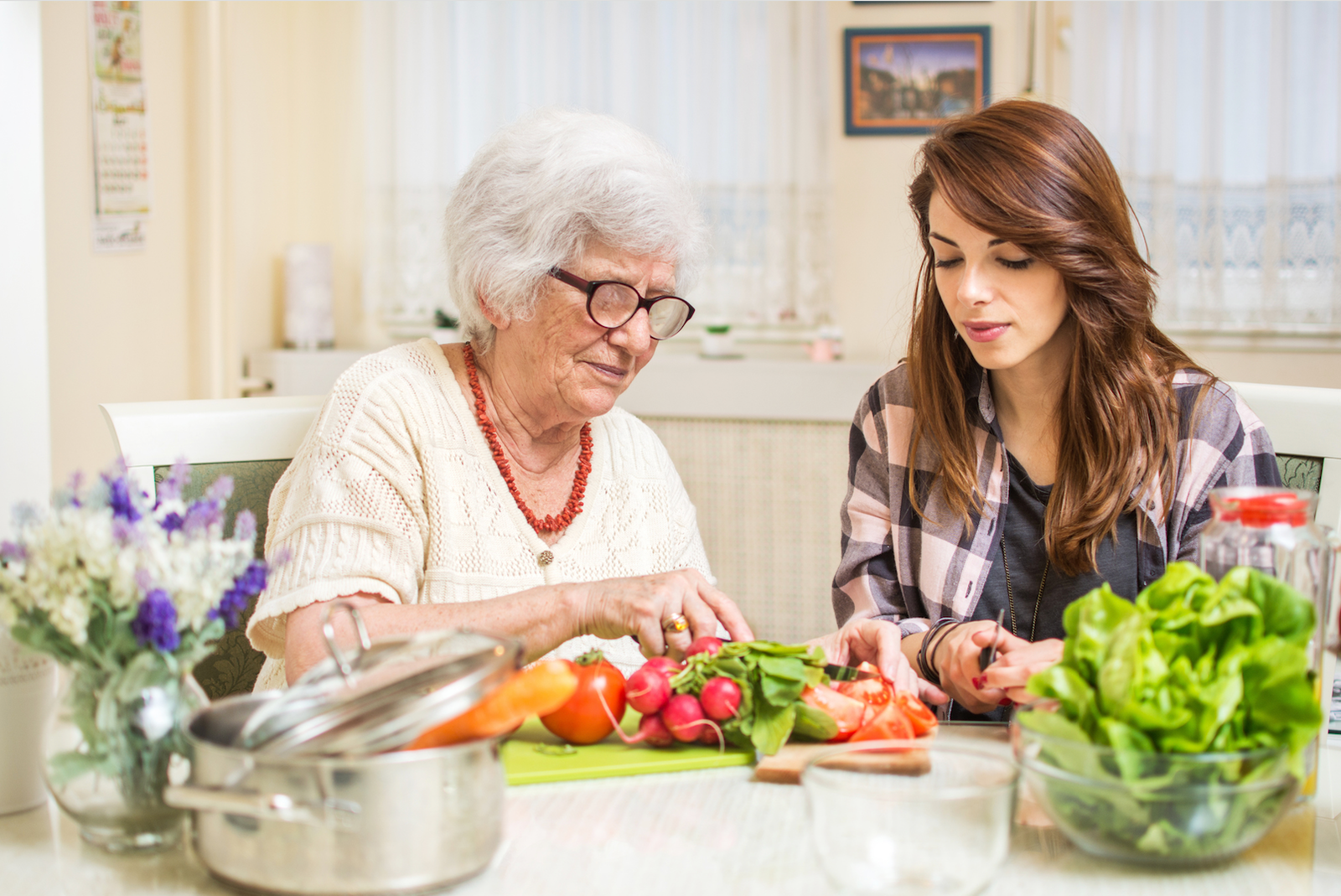
    As people age, they experience a variety of physical and environmental changes that can impact good  nutrition. For example, some medications can impact appetite and taste sensations, reducing interest  and enjoyment of food. In addition, older adults experience isolation, and it is harder for them to  motivate to prepare meals for themselves. Health challenges, both physical and cognitive, make meal  preparation more difficult as well. In other words, just when good nutrition is particularly important, it is  all the harder to do.

    Strategies to Practice for Good Nutrition

    Knowing that good nutrition is important may not be enough to make it happen. Rather than maintain  poor nutritional habits, here are some practical steps to help:

    1. Make a shopping list. Avoid impulse shopping, and plan healthy foods to buy in advance.
    2. Find easy recipes. If cooking and cleaning up are hard, research quick, simple recipes.
    3. Healthy snacking. Instead of big meals, have nutritious snacks throughout the day.
    4. Flavored water. Lemon, lime, cucumber, and mint are a few additions that can make staying hydrated a more pleasurable experience.
    5. Supplements. After checking with a physician, consider getting important nutrients with supplements.

    For some older adults, good nutrition may not be possible without some help. Home care for people  with dementia or significant physical infirmities may be the solution to maintaining a healthy diet.  Shopping, meal planning and meal preparation can be arranged to help with nutrition.

    CarePlus Home Health provides home care nursing in Montgomery County, which allows aging adults to  continue to live safely and comfortably in their own homes. Our services include assistance with shopping and meal preparation, and our staff can help devise an appropriate nutrition plan for our  clients to make sure they are getting what they need to stay healthy. Contact us today for more  information about our home care services.

  • Staying Cognitively Active

    Staying Cognitively Active

    Can we help prevent cognitive change?

    We know that as we age, our body and brain change as well.   Every so often we might forget a name, word or birthday. While inconvenient, is it indicative of something else? Some forms of forgetting are expected, while some may signal a more significant change. Can any of these changes be prevented, or, can we slow down the changes? Research does seem to indicate that we can help slow down these changes.

    While there are quite a few risk factors for cognitive change beyond our control, there are activities that we can control that could help slow down these changes.  These activities include: eating healthy, regular exercise and consistent mental and social interactions. These lifestyle habits seem to comprise a promising strategy to prevent cognitive decline. Journal of Geriatric Medicine

    Given the continuing research into the aging brain, and the increase in our older population, we can expect more studies, research and helpful strategies to slow down these changes. So, let’s do our part and start engaging in these strategies.

    Let’s take a look at these three activities that may help a healthy brain.

    Eating Healthy

    In our March blog we discussed healthy eating and shared our tips for successful eating plans. Healthy eating is a good defense against many diseases and ailments–both physical and mental. The research continues to support the benefits of well-planned meals filled with fruits, vegetables, lean meats and fish. A Mediterranean style diet includes whole grains, legumes, fruits, vegetables, olive oil, nuts and fish. This diet continues to deliver health benefits that can: lower cholesterol, help with weight loss, improve rheumatoid arthritis, and reduce the risk for developing Alzheimer’s disease, diabetes, and various types of cancer. Harvard Medical School, Health Blog 2013.

    Regular Exercise

    After checking with your doctor, develop an exercise plan that works for you. Find a good pair of walking shoes and take that walk, attend an aerobic exercise class, enroll in a strength training program, try water aerobics or even ballroom dancing. When you get moving you find yourself feeling better, moving better and, yes, the research suggests thinking better.

    Mental and Social Interactions

    Staying Cognitively Active

    Keeping your brain active includes not only socializing with friends, but learning new skills as well. The National Institute on Aging (May 17, 2017) noted that: “engaging in meaningful activities, like volunteering or hobbies, help you feel happier and healthier.  Learning new skills may improve your thinking ability, too.” Research seems to indicate that adults who learn something new help improve their memory.  And, as it happens, April is National Volunteer month. This is a great month to offer your skills, time and expertise to help others—keep your brain active as well. And, remember there are other ways to exercise your brain: read a good book, teach a class, learn a new hobby, etc.

    So, while the evidence is still coming in, eat well, exercise often and keep your brain strong and ready with new activities and social connections –for your best future!

    And, if you need assistance, we are here to help you by providing fall prevention assistance, skilled nursing and palliative care, as well as caregivers for dementia care and other elder care needs.


  • Eat Well, Exercise Well

    Eat Well, Exercise Well

    March is National Nutrition month, sponsored by the Academy of Nutrition and Dietetics (the Academy). The Academy promotes the importance of healthy eating, and good physical habits, through education and information outreach. This year the theme is “Go Further with Food”.

    What does this mean and why is this important?

    The Academy supports what we all know– the food that you eat each day makes a difference in your health and wellbeing.  This includes thoughtful planning and shopping for food that encourages those healthy choices, while allowing the opportunity to have a more consistent healthy eating experience. 

    Did you know that shopping with healthy eating in mind, and useful leftovers for later, all contribute to a sound mind, body– and pocketbook. Eating healthy does not mean eating is more expensive. This year’s theme stresses the importance of that message.

    For 2018, the Academy has included these important points in their Go Further with Food Campaign, we have added a few tips of our own for you below:

    1. Include a variety of healthful foods from all the food groups on a regular basis.

    Our tip: March is a great time to watch the beginning of local fresh fruits and vegetables appear at farmer markets. Try adding spring seasonal produce to refresh your menus.

    2. Consider the foods you have on hand before buying more at the store.

    Our tip: If you have too much of any one type of food, or an item is going out of date soon, swap ingredients with a friend or check the Academy website for useful recipes.

    3. Buy only the amount that can be eaten or frozen within a few days, and plan ways to use leftovers later in the week.

    Our tip: If you like to take advantage of better prices, (think Costco), find a family or friend to split the quantities with you.

    4. Be mindful of portion size. Eat and drink the amount that is right for you.

     Our tip: Remember, just because a restaurant fills the plate that doesn’t mean that is your appropriate serving size.

    5. Continue to use good food safety practices.

    Our tip: Storage, cooking and keeping cooked food all require attention to best practices.

    6. Find activities that you enjoy and be physically active most days of the week.

    Our tip: Find a friend or relative to enjoy a walk and talk.

    7. Realize the benefits of healthy eating. Consult experts to help.

     Our tip: We have a variety of services to help support good nutrition – including meal preparation, grocery shopping and live in support.


    Eat & Enjoy! If you or a loved one needs support call us at (301) 740-8870 or learn more about our elder care and assisted living services.

  • “You Are What You Eat”

    “You Are What You Eat”

    Thank you to our guest blogger, Health Coach Kailee, for sharing some Nutrition Tips for National Nutrition Month.

    Did you know that 68% of all diseases in the United States are diet related? This famous phrase “You are what you eat” has caught the attention of many people and made us start taking a look at what we eat on a daily basis. Giving your body the right nutrients every day and maintaining a healthy weight can help you lead a healthier and happier life.

    Here are my top 4 tips for maintaining a healthy lifestyle:

    1. Eat a protein-packed breakfast within 30 minutes to 1 hour of waking up. By doing this it will help to wake up your metabolism first thing in the morning. Also by making sure there is a mixture of protein and healthy carbs in your breakfast you will start of your day by balancing your blood sugars, which keeps you from overeating later in the day.
    2. Eat often throughout the day! It is recommended to eat 5-6 mini meals about every 3 hours throughout the day instead of 3 large meals. By doing this it will help balance your blood sugars, which will reduce cravings. This method of eating also helps because you are not as hungry at the next meal so you tend to eat less.
    3. Make sure all of your meals and snacks have protein in them! It is important for all of our meals to have the proper amount of macronutrients (protein, carbs, fats); however, protein is one of the most important! When protein is absorbed into the body it sends a signal to your brain to decrease your hunger.
    4. Stay hydrated!! You should be drinking half of your body weight in ounces of water every day. And beware of the fruit juices and sodas…they are loaded with calories and sugar that we do not need. Drinking water on a daily basis will not only flush out toxins but it will also aid with digestion and constipation, improve your mood and increase your energy!

    CarePlus promotes healthy lifestyles for the aging population. Again, thank you to Health Coach Kailee for being our guest blogger for March, National Nutrition Month.  If you are interested in more information regarding nutrition and coaching services please contact Health Coach Kailee at 301-821-3116 or KaileeCMcClure@gmail.com.

  • Top 10 Hidden Sources of Salt

    Did you know heart disease is the leading cause of death for both men and women? We understand how important your loved ones healthSalt image concerns are and we hope these tips will help.

    “After a diagnosis of heart failure, “reduce salt intake” is one of the first pieces of advice doctors offer. Sodium contributes to fluid retention, and too much sodium is one of the most common triggers for exacerbation. For this reason, doctors recommend that those with heart failure limit salt intake to 1,500 to 2,000 milligrams of sodium per day.

    But how to do that? Start by following recommendations for managing diet for heart failure. Putting away the salt shaker helps, as does learning to cook with other flavors, such as garlic, citrus, and herbs. However, many people find it’s much harder than they expected to reduce sodium intake,” Continue reading>>

  • 10 Healthy Holiday Substitutions

    With Thanksgiving on its way, the holiday season of 2011-2012 is just about ready to kick off–and with that comes lots of delicious (and usually not terribly healthy) holiday food!

    It may not be easy, but it’s a good idea to try not to overindulge during the holiday season–and there’s no shortage of tips on how you can succeed at that. One of the best ways? Make substitutions while cooking! We’ve listed some of our favorite substitutions, many of which we’d never even thought of before.

    1. Applesauce for oil or butter. Switching out the fatty oils for applesauce isn’t a new idea, but it’s one a lot of people might not be willing to try. The texture’s just right, though, and thanks to the natural sugars in fruit, even unsweetened applesauce can lend some sweetness to your baking!
    2. Graham crackers for cookies in pie crusts! Pies are one of the holiday standards, and while everyone loves a good Oreo or cookie crust, swapping that out for reduced-fat graham crackers can cut out up to half the calories while still tasting great!
    3. Stevia for sugar. This natural sweetener, which has recently been gaining in popularity is now more readily available, is lower in calories than sugar and up to 300 times sweeter. You read that right–300 times. Popular brand names are Sweetleaf and Truvia.
    4. Prosciutto for bacon. While bacon is an American standard year-round, it’s also well-known to be a major (if majorly delicious) health hazard. Prosciutto can lend a similar taste while having half the calories and two-thirds as much fat!
    5. Nuts for croutons. Serving up salad as a healthy option with your holiday meals? Croutons add a desirable crunch, but they can also pack quite a lot of fat and sodium. Instead, try lightly toasted almonds, pecans, or walnuts! Not only will you be eliminating those extra carbs, but nuts sneak in some extra omega-3 fatty oils.
    6. Pureed fruit for syrup. Looking to warm up on cold mornings with some waffles or pancakes? Instead of slathering them with syrup, try pureeing fruit with a bit of honey; it packs in a lot less sugar, and when it’s warmed on the stove beforehand, tastes even better.
    7. Frozen bananas for ice cream. You read that right! Freeze a couple of bananas overnight, then puree them in the blender; drizzle in a little bit of honey and some cinnamon. The texture’s almost identical, and the taste is to die for!
    8. Ground turkey for ground beef. Since turkey is a leaner meat, it makes a great (and seasonal!) substitution for ground beef. A few spoonfuls of chicken stock can keep it from drying out!
    9. Dry beans for canned beans. Sure, canned beans may be more convenient, but they’re so high in sodium and preservatives! Stock up on some dry beans; all it takes is a little extra soaking and boiling.
    10. Marshmallow Fluff for the butter and sugar in frosting. Believe it or not, this childhood favorite is actually healthier than most frosting; 2 tablespoons is not only fat-free, it only has 40 calories and 6 grams of sugar, while conventional frosting can pack in up to 100 calories and 14 grams of sugar (not to mention all that fat)!

    Of course, indulging in some of the ‘bad’ stuff around the holidays isn’t a mortal sin–feel free to treat yourself, but remember that, like with all things, moderation is key!

    Do you have any favorite substitutions? Let us know!

  • Caffeine and Your Health

    Thanks to today’s 24/7/365 news coverage and the public’s obsession with health, it seems like every week there’s a new study either touting or demonizing something we’ve been consuming for years as a miracle food or the newest thing that’ll kill you.

    One of the most popular subjects of such speculation is coffee. If we believe everything the health reporters on the news tell us, coffee will cure cancer, induce heart attacks, prevent mental decline and ensure debilitating migraines, all while either saving a bus full of small children being thrown from a bridge or plotting to take over the world. In other words—science and society have made a lot of claims, most of them pretty big, about such a tiny bean.

    To be fair, though, that tiny bean plays a huge part in the life of the average American. Recent statistics show that about three-quarters of the caffeine consumed in the US comes from coffee, and that over $4 billion worth of coffee—that’s right, billion, with a b—is imported to the US annually.

    So with all this caffeine we’re ingesting, what exactly are the health effects, for good or for bad?

    It’s hard to say; most of the research is inconclusive, especially when compared with other lifestyle habits such as smoking, drinking alcohol, and exercise and diet habits. For every bad claim, there’s a good one. It has been shown that caffeine can increase blood pressure, but only temporarily; and there is some evidence, though it’s not conclusive, that caffeine consumption can help the elderly retain mental acuity longer.

    There is, however, one thing that experts can agree on—too much caffeine is a bad thing (though many disagree on exactly how much is too much). More than 300 mg—about the equivalent of three cups of coffee—a day has been shown to have detrimental effects in the short term, and possibly in the long run as well.

    It should also be noted that caffeine sensitivity increases with age; the elderly may be more susceptible to its immediate effects, which on the upside include increased energy, wakefulness, and an ability to focus, but can also include jitters, tremors, nervousness, upset stomach, and a fast heartbeat. Not only can age contribute to this, but certain medications and supplements may increase caffeine concentration in the blood (such as echinacea) or have their own side effects amplified by caffeine (like antibiotics).

    What should you take away from the jumble of information available out there about the effects of caffeine? Cut back that consumption, especially if you’re older—a cup or two a day should suffice—and as always, if you have any questions or concerns, it’s best to skip the (probably confusing) Google search and ask your doctor.

  • Taste the Rainbow!

    No, we’re not talking Skittles, colored with Blue #1, Red #40, and Yellow #6–we’re talking red bell peppers, butternut squash, bananas, kale, blackberries and eggplants. One of the easiest rules when it comes to eating healthy is to make sure that your plate is as colorful as possible—with natural food colors, though! Those artificial food colorings that trail along at the end of almost every packaged ‘ingredients’ label can have some frightening effects on the body—including hyperthyroidism, hyperactivity in children, and even allergic reactions.

    When it comes to fruits and vegetables, though, a general rule of thumb is that the darker or more vivid the color, the more packed with healthful nutrients it is.

    Red fruits and vegetables (like beets, cranberries, pomegranates, rhubarbs and tomatoes) are chock-full of nutrients like lycopene that can reduce the risk of prostate cancer, reduce tumor growth in existing cancers, and lower LDL (or bad) cholesterol levels.

    Orange and yellow fruits and vegetables, including pumpkin, bananas, carrots, and sweet potatoes, pack a punch with beta-carotene, flavonoids, potassium and vitamin C, which can promote healthy joints, fight harmful free radicals, and work with magnesium and calcium to build healthy bones.

    Greens are sometimes the easiest to find! Spinach, broccoli, avocado, kiwi and cucumbers are all contain chlorophyll, calcium, folate, and lutein, among other nutrients; they can help reduce cancer risks and lower blood pressure, normalize digestion, improve your retinal health and boost your immune system.

    Blue and purple fruits and veggies, like the others listed, can do wonders for your cholesterol and digestion, but they also fight inflammation and limit the activity of cancer cells, along with improving the absorption of calcium and other minerals. Try black currants, plums, grapes, figs and raisins.

    An often forgotten group of vegetables and fruits are the white ones, such as ginger, mushrooms, onions, jicama, and garlic. While they may not pack the visual punch of their more colorful counterparts, they contain nutrients that boost the immune system, balance hormone levels, and reduce the risk of colon, breast and prostate cancers.

    So next time you look at your plate, ask yourself this—how many (natural) colors are present? The more there are, the healthier you’re eating!

  • Cholesterol: The Good, the Bad, and the Confusing

    First of all—what exactly is cholesterol, and why are there different kinds?  Are doctors purposely trying to confuse us?

    There may in fact be a secret consortium of conspiring physicians out there, but here’s what we know: cholesterol is a waxy substance that is both produced by our bodies and found in our food. We need some cholesterol—good cholesterols—because they help allow our cells to absorb fluids and assist in manufacturing hormones and even Vitamin D. So, as you can guess, having cholesterol in your body isn’t necessarily a bad thing—but having too much of a specific kind can be.

    So what exactly are these different kinds?

    Living in today’s world and inundated by news (often conflicting) about health, I’m sure you’re familiar with the terms ‘good cholesterol’ and ‘bad cholesterol.’ Because cholesterols, like other fats, can’t dissolve in the blood, they have to be carried around by special substances called lipoproteins.

    The Good

    Good cholesterol is an easier-to-remember epithet for cholesterol carried by HDL, or high-density lipoprotein. Why is HDL cholesterol good? It seems like even the experts are confused on this subject, but there are two theories. One is that HDL carries cholesterol away from the arteries and to the liver, where it can be passed from the body. Some experts also think that HDL might be dragging cholesterol away from plaque, and in doing so, slowing its build up in arteries.

    So, HDL cholesterol is good. We want more of it. In fact, the higher your HDL, the less likely you are to have a heart attack or stroke. How do you raise your HDL levels? Quitting smoking, losing excess weight and being more active all help increase HDL levels, and there are some medications out there that can help, too.

    And that brings us to…

    The Bad

    Bad cholesterol is any cholesterol that’s carried by low-density lipoprotein, or LDL. LDL cholesterol tends to build up along the inner walls of arteries, and when combined with other substances in the blood make a hard, thick substance called plaque that can narrow the arteries and make them less flexible. The biggest danger to this buildup, though, is the possibility of a clot forming and getting stuck in the plaque—blocking the flow of blood and cutting oxygen off from vital organs. That’s right, this is often the stuff to blame for heart attacks and strokes.

    There are ways to keep your bad cholesterol (LDL) levels low, though. Diet and exercise are the most commonsense ways, but if they’re just not cutting it, your doctor also has medications to lower your bad cholesterol.

    Still Confused?

    Don’t worry. Your doctor or a stroke care professional can explain all of this—and give you your blood cholesterol numbers by performing a simple blood test. Just remember: keep your high-density lipoprotein count (HDL cholesterol) high, and your low-density lipoprotein (LDL cholesterol) low, and just like your doctor, your mom, and your own common sense have been exhorting you your whole life—eat your veggies and take the stairs!

  • Three Easy Steps to a Healthy Heart

    February is American Heart Month. Cardiovascular disease is the number one killer in American society today—in 2006, 81 million Americans had one or more forms of cardiovascular disease, including high blood pressure, coronary heart disease, stroke or heart failure. That same year, over 831,000 of those suffering from cardiovascular disease died.

    What can we do to stop heart disease? Even on a personal level, it seems daunting—how do we undo years’ worth of too many sweets, too many fats, too many days spent inside on the sofa instead of out in the world? How can you make your heart a healthy heart?

    The good news is, you don’t need to completely revamp your lifestyle to get a healthy heart and cut your risk of developing cardiovascular disease. Here are three easy steps you can incorporate into the life you already live that will do just that—without requiring too much of a sacrifice.

    1. Go for a walk. You don’t have to purchase an expensive gym membership or pick up a fad exercise class, and you don’t need to load up on confusing exercise equipment. All you need to do is tie on a pair of sneakers and walk—just half an hour a day can cut your risk of developing heart disease!
      For added encouragement, tips and information, explore the American Heart Association’s Start! program, which encourages Americans to get out and stretch your legs while improving your health.
    2. Pay attention to what you put on your plate. Eating a healthy diet doesn’t necessarily mean giving up all the tasty treats that we enjoy, and it doesn’t mean cutting out all fat and sugar. Try making heart-healthy substitutions—for instance, go for fats and oils that are in liquid form, rather than solid form. Solids—like stick butter—tend to be full of bad fats, the saturated and trans fats, while liquids—like vegetable oil—are usually monounsaturated and polyunsaturated fats, which can not only help lower your bad LDL cholesterol but also give you omega-3 and omega-6 oils.
    3. Take a deep breath. Stress can contribute to the development or exacerbation of cardiovascular disease—so relax! Eliminating stress may sound easier said than done, but there are some easy ways to do it. Watch your favorite comedy—laughter is an instant stress-reducer—or go for a walk with a friend you haven’t seen in a while. Use to-do lists and prioritize tasks to reduce anxiety, and go to bed early to get that good night’s sleep. Giving up alcohol, cigarettes and caffeine can also bring your stress levels down—and improve your physical health at the same time.

    For more information on how to keep your heart healthy, visit the American Heart Association’s site at www.heart.org.