Category: Dementia

  • Talking to Your Loved One About Getting Help at Home

    Talking to Your Loved One About Getting Help at Home

    The beginning of the year is a good time to reset and refresh. For our older adults aging in place, it is a good time to reassess their safety and their own ability to live independently in their current home. During the holidays, you may have noticed that a loved one was having difficulties with housekeeping, daily chores and/or every day activities. If life seems a bit overwhelming for an aging relative it may be time to consider support in the home.

    Approaching the Support Subject

    Your older loved one may be among the 75% of older adults who would prefer to stay in their home and continue to age in place. However, after a lifetime of managing for themselves, it can be hard for your loved one to admit that they need additional help. The emotional aspect of losing their independence along with the physical ability to manage a home, prepare meals, take out the trash, shower every day can be stressful. It is important to start the conversation — remember to meet your loved one where they are and begin the conversation by exploring your feelings and theirs. Approach the topic with care, concern, and curiosity. Listen to their responses and validate them before sharing your own feelings. Express a willingness to work with them on a list of priorities to support them so that they feel comfortable discussing. It starts with a conversation.

    Conversation & Consideration

    When observing an aging adult, what key considerations can help determine whether additional support at home is appropriate?

    • Health: Review your loved one’s medical needs, and assess whether they need help with medication, getting to doctor’s appointments, and other additional support
    • Safety: Do a 360 degree review of the home and identify specific ways that safety can be improved by installing grab bars, moving frequently used items to more accessible shelves, decluttering, or other changes that can make a real difference
    • Isolation: Considering the danger of isolation, discuss how much socializing your loved one is doing, and consider ways to prevent the mental and emotional drain of isolation
    • Daily activities: As we age, everything from bathing and dressing to cooking and cleaning can become more difficult. Assess whether immediate help is needed or talk about some eventual options when the time comes

    What’s next?

    Begin by creating a list of current concerns and prioritizing what feels most urgent. Focus first on the issues that affect safety, health, and overall well-being. Once priorities are identified, develop thoughtful solutions for the top concerns and introduce small changes gradually. Making too many adjustments at once can feel overwhelming, especially for an older loved one, so it’s important to move slowly.

    As changes are introduced, schedule regular check-ins to evaluate how things are going. Some ideas may seem right in theory but prove less effective in practice, making it necessary to adjust the approach. At the same time, new concerns may surface as routines shift. This ongoing evaluation allows you to modify the plan in a way that remains responsive and supportive.

    While rolling out changes over time can feel challenging, stability is essential for older adults, and sudden disruptions can increase stress or resistance. If your location or personal commitments make it difficult to be consistently present during implementation, working with a home care organization can help ensure the plan is carried out smoothly. Professional support can provide consistency, reassurance, and an extra layer of care—helping your loved one adjust while giving you reassurance.

    For more than 30 years, CarePlus has been providing home health care services including skilled nursing care, chronic disease management, post-acute and transitional care, daily activities, companionship and ongoing support, as needed.

    Contact us today to learn more.

  • Living At Home With Alzheimer’s

    Living At Home With Alzheimer’s

    For adults with memory impairment like Alzheimer’s, change can be difficult, so it is no surprise that the prospect of moving out of the home and into a care facility is met with resistance. According to research published in the Journal of American Geriatrics, there has been an increased trend for people with dementia to prefer staying at home for as long as possible. However, staying at home presents some significant challenges, particularly for people who live alone. With some awareness and forethought, it is possible to stay at home. Here are some important considerations.

    Managing Activities of Daily Living

    As dementia progresses, many activities of daily living (ADL) become increasingly difficult. From grocery shopping to cleaning, household chores become confusing, and often they are neglected. In addition, personal care like bathing, dressing, and grooming can be forgotten or avoided. As dementia progresses, individuals require increasing assistance with ADLs, which may be beyond the capacity of family, especially if they don’t live together. It’s important to regularly assess the status of ADL abilities and make adjustments to meet increased needs. 

    Assuring Safety

    Individuals with Alzheimer’s suffer from progressive cognitive decline, which impacts many aspects of their safety. Something as simple as remembering to turn off a stove can be a major hazard for someone with memory and focus impairment. Since Alzheimer’s affects older adults, there can be physical challenges that are exacerbated by dementia, such as an inability to problem solve in the event of a medical emergency like a fall or a kitchen accident. Also, dementia can lead to “wandering” – where a person gets lost in their own neighborhood because they simply can’t remember where they live. With care and planning, each of these and many other safety elements can be addressed, and measures can be taken to adapt to increasing impairment as the disease progresses.

    Avoiding Isolation

    Loneliness and isolation are a problem for all people who live alone, but for people living with Alzheimer’s the consequences can have a real, negative impact on their continued ability to live in their own home. A recent Washington Post article identified a significant increase in individuals with Alzheimer’s who experienced isolation due to the COVID-19 protocols. Since dementia can make even simpler technologies difficult to manage, in-person contact is critical to the continued health and well being of people with Alzheimer’s. 

    In order to take care of these and other issues that impact people with Alzheimer’s living at home, we recommend beginning with a thorough assessment by a specialist in geriatric and memory-care concerns. The assessment should look at all of the factors in the home that might pose a difficulty or even a threat. Once the assessment is complete, there are a number of ways to address the findings. In-home care offered by trained specialists like our team at CarePlus Home Health can be an important part of the solution. Located in Montgomery County, our team is highly trained in the care, dignity and safety of our clients with Alzheimer’s. We offer in-home assessments as well as a wide range of customized services to best address the needs of each individual. Contact us to find out how we can help.

  • Alzheimer’s & Brain Awareness Month

    Alzheimer’s & Brain Awareness Month

    June is National Alzheimer’s & Brain Awareness Month. This month CarePlus Home Health took part in programming that helped us raise awareness and support for Alzheimer’s Disease. 

    Alzheimer’s Disease is a progressive disease that damages memory and other important mental functions. Memory loss and difficulty thinking are common symptoms and contribute to mental decline. Some other symptoms are:

    • Problems with language, visualizing and spatial relationships 

    • Difficulty performing familiar tasks 

    • Disorientation with time and place

    • Poor judgment 

    • Attention issues

    • Changes in mood, behavior or personality  

    • Loss of desire or initiative

    Better Care, Better Health – Alzheimer’s Association National Capital Area Chapter


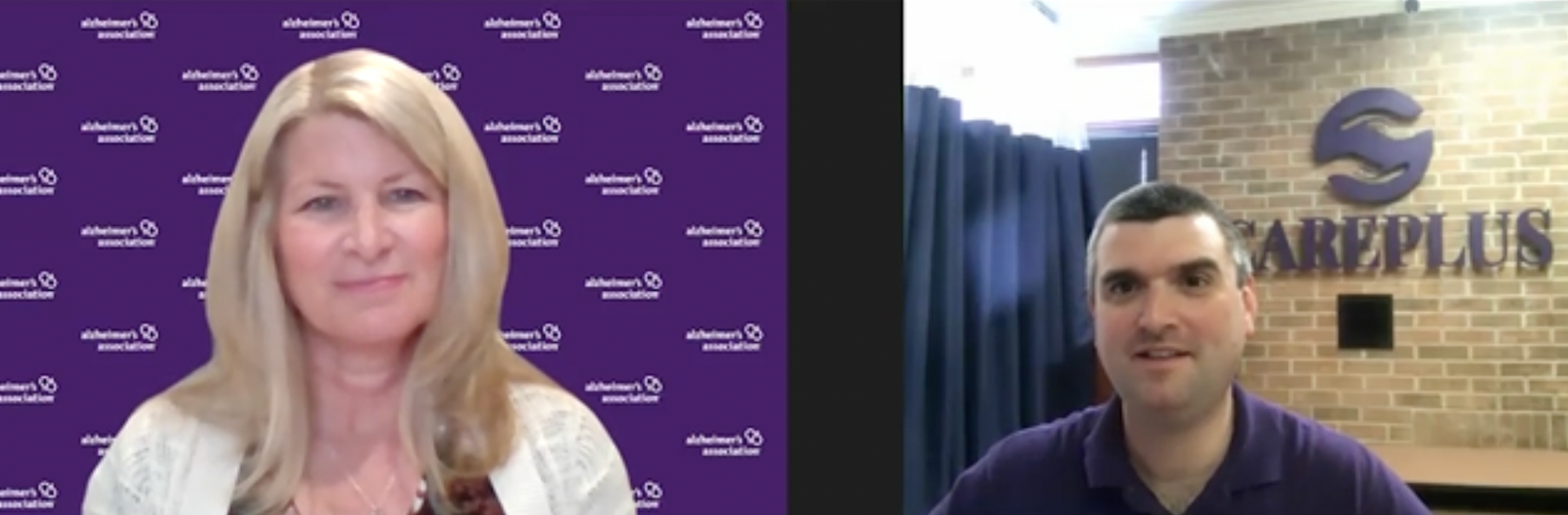
    Our CarePlus Executive Director, Andrew Ryan, sat down with Sheila Griffith, Program Manager for the National Capital Area Chapter of the Alzheimer’s Association. They discussed all of the exciting programs coming up for the Alzheimer’s Association including the Longest Day and the Alzheimer’s Walk!


    The Alzheimer’s Association National Capital Area Chapter offers many different resources to support you and your loved one in all stages of the disease. From support groups to educational programs, there is something to guide everyone through this difficult time. 

    CarePlus is here for you!

    Our services are adjusted to meet your needs. Whether you need us for a few hours a day, or 24/7, we can support you and your loved one. Our caregivers can help with memory care, lifestyle strategies, nutrition and daily living, physical stability, mobility and exercise, and fall prevention. 


    Let’s Get Started. Call us today at (301) 740-8870 or email us at info@careplusinc.com to discuss your needs. We are here 24/7 to help you.

  • Home Health Care: Five Things to Look for in a Provider

    Home Health Care: Five Things to Look for in a Provider

    It’s a difficult topic to discuss with your family and loved ones: the choice of a home health care provider. However, it is one of the most important decisions you will ever make. 

    So, in order to help guide the decision-making process for a home health care provider, here are five considerations:

    1. Is the staff experienced and licensed? : Thorough screening of prospective caregivers is a priority as you are ensuring the safety of your loved one in their care. Caregivers must have all the up-to-date, certifications, and licenses for the specific care that you require. Your caregiver should be experienced, professional, and compassionate. 
    2. How many years have they been in business? Every business has to start at some point in time yet a caregiver from a reputable company with years of experience is a plus when seeking care for your loved one. In-home health, companies that have been in business for numerous years may have higher retention rates and more experienced caregivers. In addition, established companies tend to have excellent training programs in place to retain compassionate caregivers and grow referrals. 
    3. What services do they offer? : If you are looking for nursing or supportive services, a comprehensive home healthcare provider should be able to deliver a wide variety of services.  Among those services may be hourly and live-in home care services either at home or at an assisted living facility or nursing home. Care Plus provides both in-home care and nursing home services. Our services are customized to meet the needs of the patient and their families. It may be a short-term or long-term plan. Avoid “cookie-cutter” or “one size fits all” service providers. Each patient is unique and deserves a customized plan that will meet their unique needs.
    4. What do the reviews say? : Reviews are a reliable resource that can be quite helpful to you as you weigh the different caregiving choices. Home health care providers that have been in business over the years, should have an extensive list of online reviews.   You can visit the www.caring.com, Better Business Bureau (BBB), Yelp, Google My Business, and Facebook should have client reviews posted on their pages. The caregiver website should have testimonials posted, too. We also recommend that you call the caregiver and ask for references.
    5. What do they provide for Alzheimer’s and dementia patients? Make sure the caregiver offers services for Alzheimer’s or dementia patients. As older adults age this may be a need and having an In-Home Healthcare provider who is attuned to early signs of dementia is imperative. Check with the company to verify that the caregivers have specialized training in these health conditions.

    It will give you peace of mind knowing that they have the best care available. These five tips will prepare you for your next steps. If you should have any questions feel free to reach out.

    CarePlus Home Health, Inc. has experienced and compassionate home health caregivers. Call us at (301) 740-8870 for a consultation. We offer home care in the Montgomery County, MD area. 

  • Putting Families First: Parkinson’s Care Program

    Putting Families First: Parkinson’s Care Program

    Your loved one has been living with Parkinson’s or Parkinson’s + Dementia, CarePlus can help.

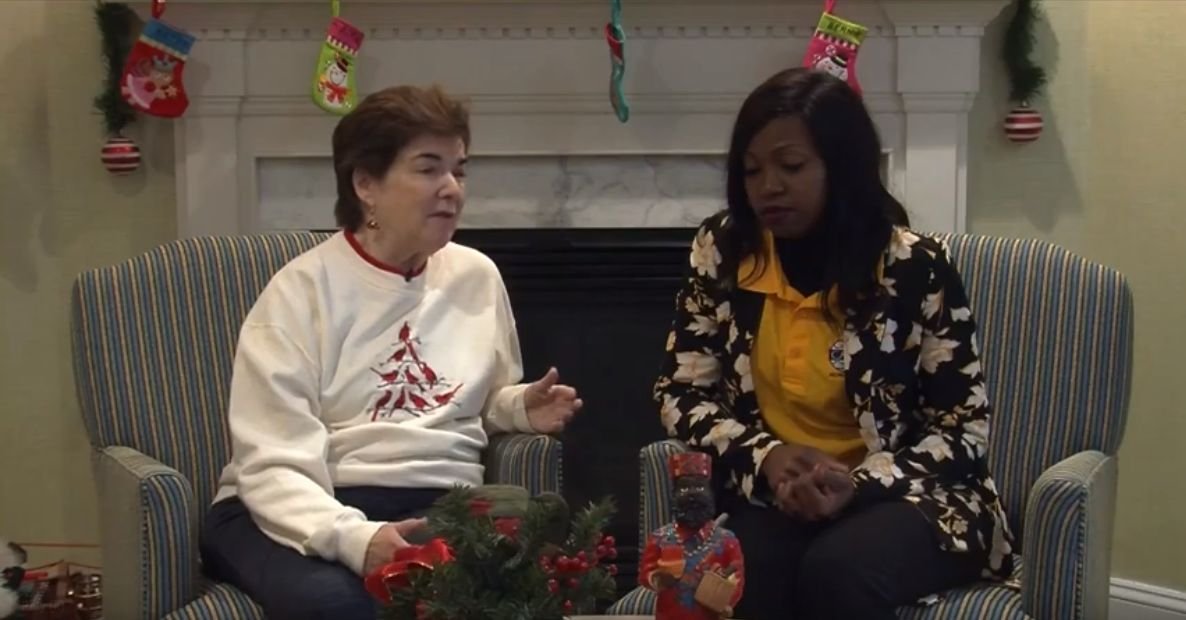
    Our client Roxanne J. shares about the assistance Tom provided in managing her life before Parkinson’s. In addition, she shares her gratitude for the caregivers at CarePlus Home Health in helping manage her activities of daily living after her onset of Parkinson’s.


    Roxxane J: “Tom, I think the most value that you have brought to me was that I worked with your personal trainer. I was able to lose 30 pounds and 30 points off my diastolic numbers in just about a year and a few months. That was the best thing that happened for me. But you’ve been very friendly and made me feel welcome in your office. And I have appreciated all that you’ve done in making sure that I was safe. Now, I’ve had an illness which requires quite a bit of help. I’ve had people like, Ummi, and others come into my apartment and help me do laundry, changing of sheets. And also, now you are bringing me my medications two times a day. And that has made me very healthy again. I am very happy with what has happened with my progress in such a short time and it is all because of CarePlus’ attention.”

    At CarePlus Home Health Inc., home care is our passion.  At CarePlus we recognize all our clients and value the importance of the service we provide. It is imperative to make the right fit for your family.  For the past 20 years, we have provided our clients in Montgomery County, MD and the surrounding areas with excellence, compassion and understanding. Our mission, to provide professional, compassionate care to individuals, while maintaining their independence and quality of life, in their home or community settings.

    If you are interested in learning more about our home care services including:  assisted daily living services,  bathing, companionship, dressing, exercises, grocery shopping, housekeeping/laundry and live-in support – please contact us at (301) 740-8870 or info@careplusinc.com.

  • Putting Families First: Dementia Care Program

    Putting Families First: Dementia Care Program

    Our Dementia Care Program offers a wide range of care services for loved ones who have forgetfulness and who are confused and tend to wander. 

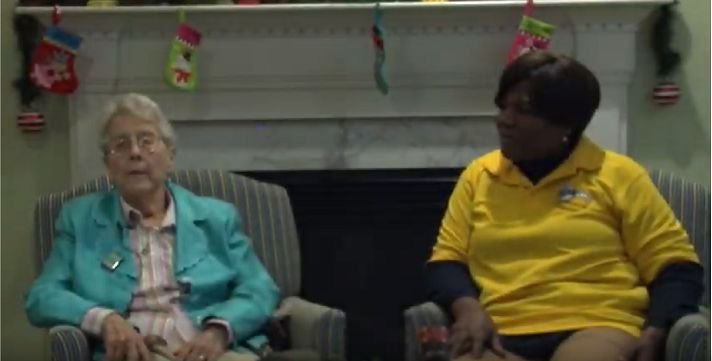
    Sandra H., shares about the many ways the different caregivers at Care Plus Home Health have been extremely helpful in assisting with all of her activities of daily living.

    “I’ve had multiple caregivers and right now Jane is my last one, and she’s been very good to me. I had somebody else but I can’t even remember what her name is because like I said, I’m very forgetful. She remembers. She cooks. She does some cleaning for me. She keeps me honest.”

    At CarePlus Home Health Inc., home care is our passion.  At CarePlus we recognize all our clients and value the importance of the service we provide. It is imperative to make the right fit for your family.  For the past 20 years, we have provided our clients in Montgomery County, MD and the surrounding areas with excellence, compassion and understanding. Our mission, to provide professional, compassionate care to individuals, while maintaining their independence and quality of life, in their home or community settings.

    If you are interested in learning more about our home care services including:  assisted daily living services,  bathing, companionship, dressing, exercises, grocery shopping, housekeeping/laundry and live-in support – please contact us at (301) 740-8870 or info@careplusinc.com.

  • Alzheimer’s and Dementia Care

    Alzheimer’s and Dementia Care

    In 1983 President Ronald Reagan established November as Alzheimer’s Awareness month. At that time, there were approximately two million people suffering from the disease. Today that number is over five million and growing. It was hoped that by devoting awareness to this devastating disease there would be an increase in research, education, collection of data and valuable information for those who suffer from the disease, treat the disease and care for those with the disease. While much has been looked at, there is still much to be done. 

    The Alzheimer’s Association (Alz.org) provides the following compelling facts and figures about the magnitude and impact of this disease:

    1. Alzheimer’s disease is the 6th leading cause of death in the United States.
    2. 16.1 million people provide unpaid care for people with Alzheimer’s or other dementias.
    3. 18.4 billion hours of care are provided by unpaid caregivers. 
    4. Between 2000 and 2015 there was a 123% increase in those with Alzheimer’s disease. 
    5. If Alzheimer’s could be diagnosed accurately and early enough, medical and care cost savings could total up to 7.9 billion dollars. 

    While the cost to society is great and continues to grow rapidly, those with the disease –and their families and caregivers —will continue to fight the disease each and every day. They are joined in their fight by researchers, medical professionals and ever changing technology. For more information:

     https://www.nia.nih.gov/about/advances-alzheimers-disease-related-dementias-research 

    While waiting for research and a cure, education and early intervention remain crucial.

    Learning the signs of Alzheimer’s can increase and improve better outcomes.

    The National Institute on Aging/National Institute of Health notes that a person, while healthy may have more difficulty navigating a complex world and has several symptoms that should be not be overlooked. Some of the symptoms may include:

    1. Memory Loss that impacts day to day activities
    2. Poor Judgement leading to inappropriate decisions
    3. Loss of spontaneity and sense of initiative
    4. Repeating Questions
    5. Difficulty handling financial affairs
    6. Losing a sense of direction, getting lost, trouble with time
    7. Losing or misplacing items
    8. Mood and personality changes, changes in social activities
    9. An increase in anxiety and aggression

    Consult a medical professional if you, or your loved one might be experiencing some of the above symptoms. 

    Are there opportunities to reduce the risk of Alzheimer’s disease? According to the Mayo Clinic, while there is no conclusive evidence, there are indicators of several things that can be done to reduce the risk of developing the disease.

     Improve overall health. While research has not confirmed these strategies will prevent Alzheimer’s, the Mayo Clinic suggests these good health practices:

    1. Avoid smoking.
    2. Control vascular risk factors–including high blood pressure, high cholesterol and diabetes.
    3. Eat a well-balanced diet (consider the Mediterranean diet as mentioned above), including plenty of vegetables, fruits, lean protein and protein that includes omega-3 fatty acids.
    4. Stay physically and socially active. Start an exercise program (check with your doctor first) if you are not already exercising regularly.
    5. Practice good mental health. Engage in reading, socializing, take courses, practice stress reduction, etc.
    6. Use thinking (cognitive) skills such as memory skills.

    https://www.mayoclinic.org/diseases-conditions/alzheimers-disease/expert-answers/alzheimers-prevention/faq-20058140

    Alzheimer’s is one of the most challenging diseases of our time. It can not only affect your loved one, but the entire family and those who provide care. During the month of November reach out for more information and awareness about Alzheimer’s disease. CarePlus is here to help—with support groups, experienced caregivers, expert advice and our caring professionals are here to help you each step of the way. Learn more about our Dementia Program here. We look forward to hearing from you. 

  • June is Alzheimer’s and Brain Awareness Month

    June is Alzheimer’s and Brain Awareness Month

    According to the Alzheimer’s Association, alz.org:

    Alzheimers’ disease affects approximately 5.7 million Americans today, 55 million of whom are over the age of 65.  It is the 6th leading cause of death (one in three adults will die from this disease) in the United States. 

    Here are a few more facts:

    • Ten percent of adults 65 or older have Alzheimer’s dementia.
    • Almost two-thirds of Americans with Alzheimer’s are women.
    • Older African-Americans are about twice as likely to have Alzheimer’s or other dementias as older whites.
    • Hispanics are about one and one-half times as likely to have Alzheimer’s or other dementias as older whites.
    • Every 65 seconds an adult in the United States is afflicted with the disease.

             For more information see alz.org

    We can expect that these numbers will grow as our country ages–in disproportionately large numbers—causing billions of dollars in healthcare costs and unpaid caregiver hours.

     At this time, Alzheimer’s disease is the only disease in the top ten list of diseases in the United States that cannot be treated or cured. This month has been designated as Alzheimer’s and Brain Awareness month to bring not only attention–but action–to fight this devastating and deadly disease.

    So, what can we do while we are waiting for a cure, vaccine or other medical intervention to prevent, stop or reverse this disease?

    According to Lisa Genova, neuroscientist and author of the book, Still Alice, the way we live influences our risk. In her April 2017 TED talk, Dr. Genova acknowledged that there is risk factors including: 50 years old or older, inherited genes, poor sleep habits and cardiovascular disease.

    She understands that while we cannot change our age or our genetic disposition, we can lower our risk through better sleep habits, exercising regularly and eating a heart healthy diet. 

    While we all know that exercise and a heart healthy diet are an important component for preventing almost all diseases, Dr. Genova adds yet another important component: strengthening neuroplasticity and cognitive reserve.  

    What is Neuroplasticity? It is the ability of the brain to develop and find multiple pathways to solve problems. Think of the brain as an intricate web of roads and streets. If one road is closed, or under construction, we need to take a different route to get to our destination. The brain will give us multiple routes if it is strong enough, it can give us resiliency when faced with a roadblock.  Dr. Genova presents a compelling look at how exercising the brain develops and maintains those multiple pathways.  Exercising the brain can strengthen our neuroplasticity and resiliency thus keeping our memories and cognitive awareness keen.  

    How do we strengthen our brain? We need to go beyond crossword puzzles and involve all our senses. Read a book, join a book club, make friends, learn to speak Italian, listen to educational seminars, take a class, do something enjoyable and unfamiliar. Learning new things rich in meaning and involving many of the senses is an ideal way to exercise the brain and have a positive impact on neuroplasticity and resiliency.

    So, go for it- try something new! Learn a new language, take up knitting, write a book, start a new hobby or take a cooking class. New experiences can keep you happy, healthy and exercise your brain.

    If you want to learn more, The Charles E Smith Life Communities, will be presenting an Evening with Lisa Genova on June 14- click here for more information.


  • Reliable Caregivers To Help Support You…

    Reliable Caregivers To Help Support You…

    There is no doubt about it, when you think of the coldest month of the year, February comes to mind.  But along with the bitter cold comes a blast of warmth and support.

    February is, after all, a month filed with care and focus on many health and wellness topics including American Heart Health Month, World Cancer Day, Random Acts of Kindness Day and National Caregivers Day.  Not to mention, for chocolate lovers and sweethearts infused in the middle, the celebration of Valentine’s Day.

    How extraordinary that all of these holidays are celebrated in the same month! There is a good reason– these holidays share a common thread—they all focus on individuals, groups and people caring for others– whether through awareness, education, outreach and/or research.

    The American Heart association and World Cancer Day remind us of the need to raise awareness for those struggling with cardiac conditions and/or battling cancer. Just around the corner is Random Acts of Kindness Day which will certainly remind us to look for opportunities to reach out and help others, just because.  Then on the 3rd Friday of the month, National Caregivers’ Day, we recognize and understand the importance of professional caregivers and honor their dedication.  

    And, if you need assistance, we are here to help you by providing fall prevention assistance, personal care, skilled nursing, as well as caregivers for dementia care and other elder care needs.

    National Caregivers Day reminds us of the importance of serving the community.

    Services Include:

    caregiver

    dementia care

    elder care

    fall prevention

    skilled nursing

    Let’s kick off February, Go Eagles, with some love and care, sorry Patriot fans!

  • National Family Caregivers Month

    National Family Caregivers Month

    It is no coincidence that the month of November is not only Thanksgiving, but also National Family Caregivers Month.

    Having two very important events in one month, provides us the opportunity to give thanks together with family and friends for all that we are grateful for, as well as the time to honor and thankfamily, friends and colleagues who volunteer their energy to provide care for others.

    Volunteer caregivers contribute countless hours of companionship, support for personal needs, and other related services to help loved ones in need of assistance. Very often these humble volunteers never identify themselves as caregivers, and as a result never take advantage of services and support systems available to them to help support all that they do. Caregivers can find their role rewarding and fatiguing, heartwarming or discouraging, all at the same time.

    Do you know someone who is a tireless caregiver? If so, help celebrate their contributions and thank them for all that they do to help so many in need. Acknowledge that caregiving can be rewarding, but lonely and stressful as well. Let them know that there are people ready to support them as they navigate all of the highs and lows of helping others. Share with them the gift of these Ten Tips from the Caregiver Action Network (caregiveraction.org):

    1. Seek support from other caregivers. You are not alone.

    2. Take care of your own health, so you can be strong enough to take care of your loved one.

    3. Accept offers of help and suggest specific things people can do to help you.

    4. Learn how to communicate effectively with doctors.

    5. Caregiving is hard work so take respite breaks often.

    6. Watch out for signs of depression and don’t delay getting professional help when you need it.

    7. Be open to new technologies to help you care for your loved one.

    8. Organize medical information so it’s up to date and easy to find.

    9. Make sure legal documents are in order.

    10. Give yourself credit for doing the best you can in one of the toughest jobs there is!

    We, too, at CarePlus want to take this opportunity to thank all of the family caregivers for giving so much of themselves to care for others. We know this is not an easy job for you and we are here to help you in a variety of ways. Visit CarePlus Resources Here. Please do not hesitate to contact us for support, resources and services at 301-740-8870.

    At this time of year, all of us at CarePlus want to wish you and your family a very Happy Healthy Thanksgiving filled with joy, good health and fun!